

I wandered along a lake’s shore, at the back of a group; human footprints criss-crossed with those of kangaroos and emus. The colours were what first caught the eye: pigface and saltbush in the hues of tropical fruits. Meanwhile, looming clouds in the north looked like a mountain range of mussel shells.
The shallows were like polished metal; raindrops softly scratched circles in its surface. I watched as red-capped plovers made short, skittering flights across a spit. Some of our cohort of walkers were so chatty that they hardly noticed the birds. Meanwhile, others lugged marine rubbish they’d collected, while a few individuals had peeled off, like me, to birdwatch or beachcomb or botanise in near-solitude.
I crouched in the wet sand, away from other bootmarks, having seen a skipper butterfly settle on a rush.
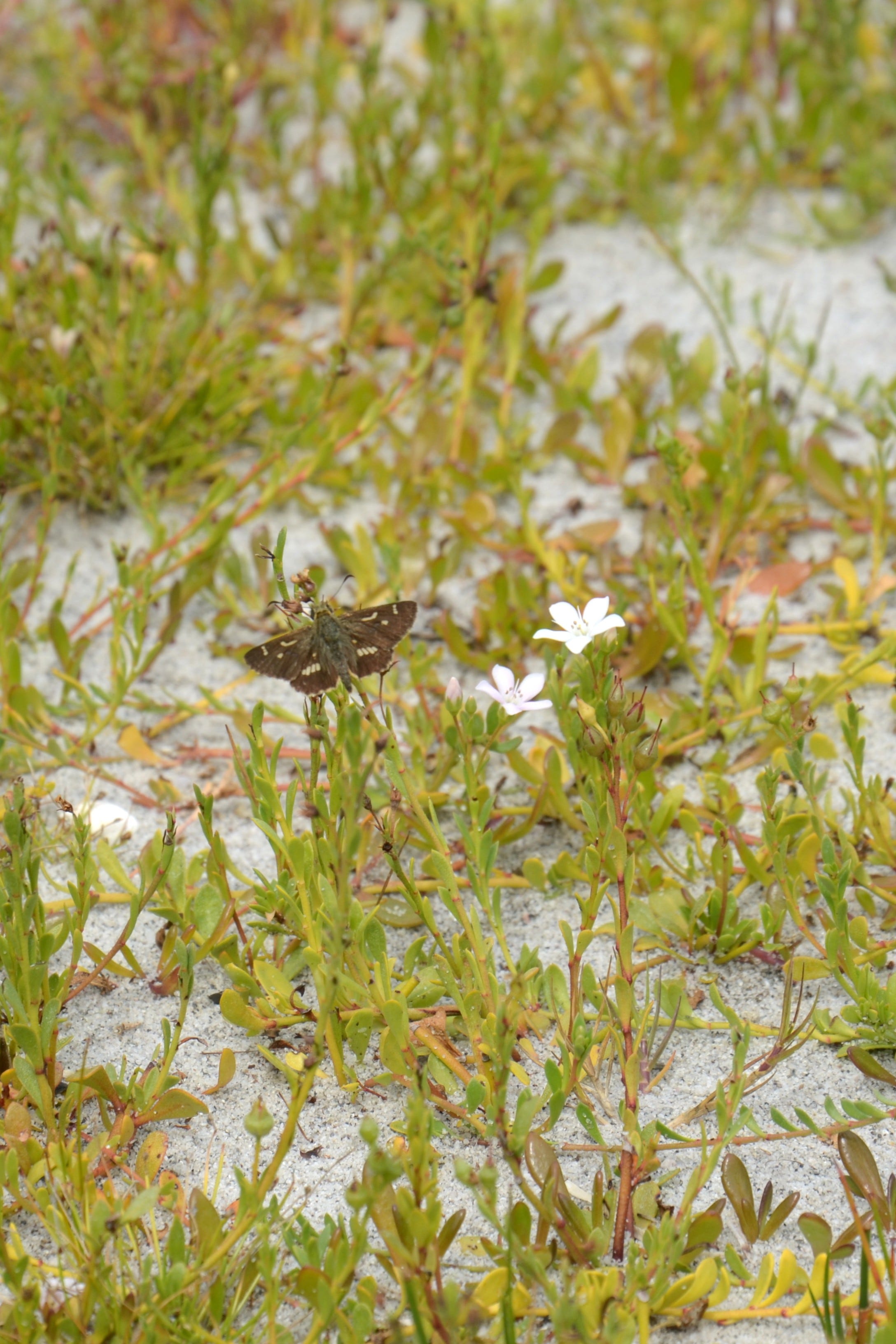
An introverted beetle latches on
to the curved stem of a bracken fern.
Washed up among the surf
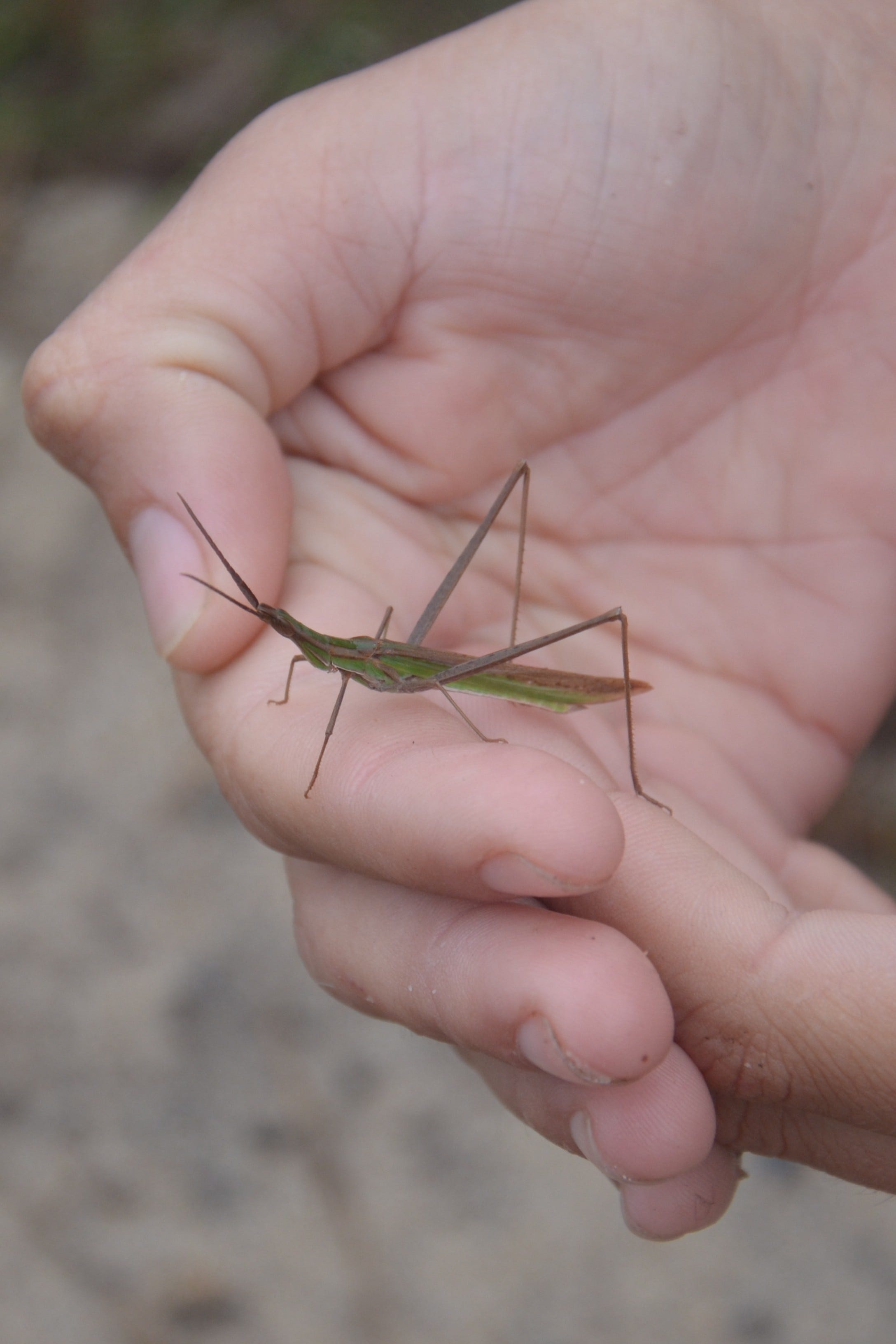
is the filmy body of a praying mantis.
The spider’s web, suspended,
is like the strings of a zither.
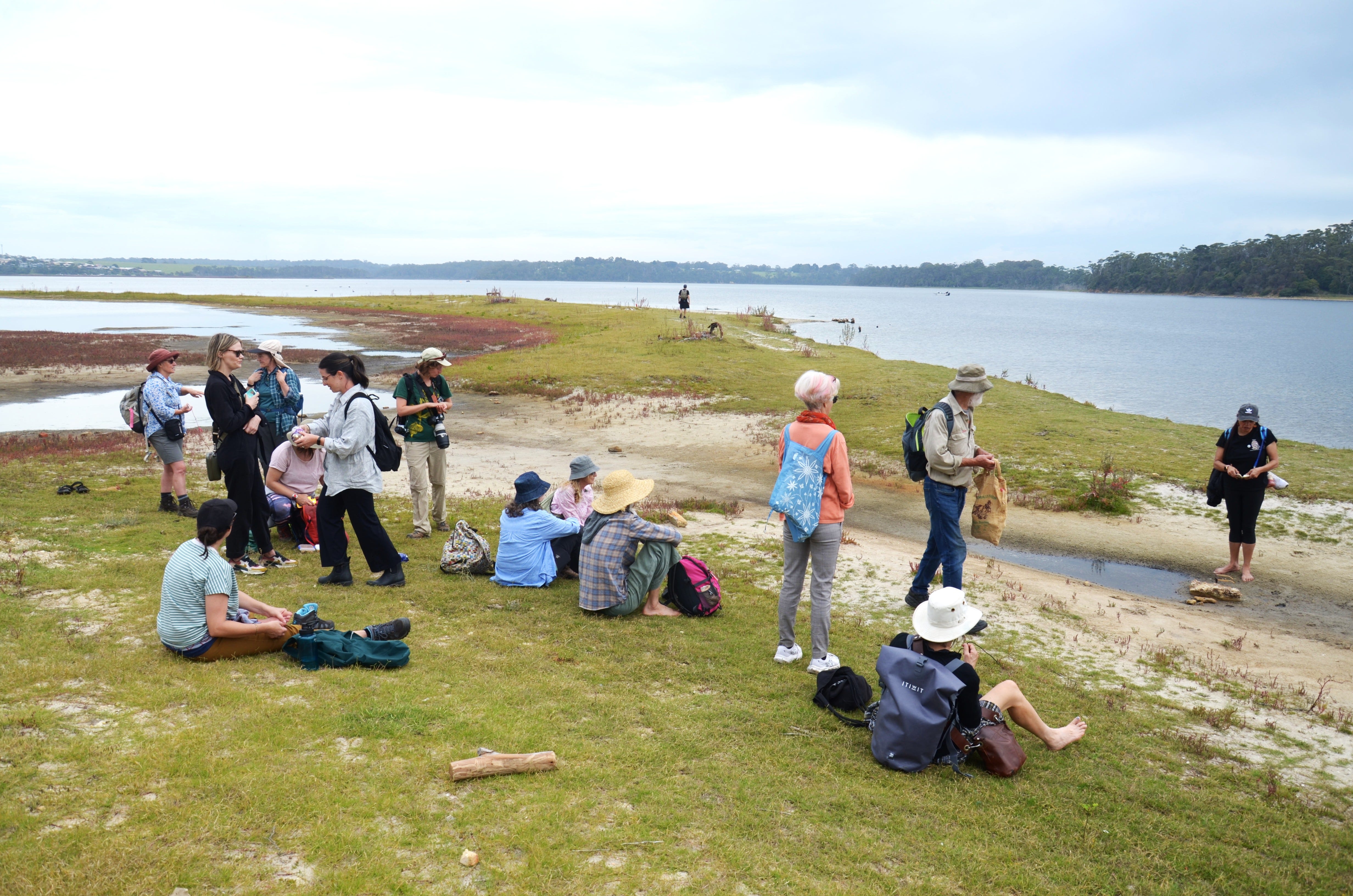
This was on Lake Tyers, which is also known as Bung Yarnda. Over the past few years, it has become one of my favourite places. It’s rich in stories and it’s an ecological treasure. No matter how deep you dig into the layers of history or geography here, it seemingly never ends.
With a small party of fellow-travellers, I’d embarked on a seven-day itinerary through East Gippsland. This is a vast and sparsely-populated corner of the country; it felt good to have another chance to move slowly through the mosaic of landscapes that make up this part of the world.
The route had been sketched out by a social enterprise named FLOAT, who run all sorts of curious programs and events throughout the region. Our adventure was called the ‘Far East Flaneur’.
The word ‘flaneur’ may have a different definition in the dictionaries of East Gippsland. There, the flaneur is an observer of nature; they’re open to the senses and mindful of leaving little environmental impact. They might pick up marine rubbish as they go along – or let themselves get thoroughly distracted by insects.
Like a lot of FLOAT’s projects, the Far East Flaneur trip was both rather simple and fairly ambitious. The idea began with a vision to walk down the main street of Lakes Entrance and keep going till we got to Cape Conran, nearly 100 kilometres away. Ultimately, other forms of transport were incorporated into the trip – bikes, kayaks, a raft (and yes, for a few short sections, a mini-bus) – but after a good amount of logistical puzzling, the basic concept was set in motion on a warm Sunday morning in Lakes Entrance.
This wasn’t merely a physical excursion. There were added elements of art and music, as well as moments of reflections. Wherever we pulled up of an evening, there was good tucker and conversation around the campfire. However, human-powered movement was central to the journey. Even as the first dozen or so of us strolled out of town on that sunny morning – focusing on the fall of each footstep and sensing a long journey opening up before me – I felt a good deal of the previous weeks’ harried thoughts slip away. I’m sure I wasn’t the only one.
Philosophically, as much as physiologically, walking – as with kayaking, and, to a degree, cycling – sets a person up to experience a place in a format that’s akin to storytelling. You can’t whizz through East Gippsland in a motorised vehicle and expect to know it. To get a proper feel for somewhere, we must be in touch with the elements – and be able to stop and smell the soil, or notice the insects.
In another contrast to the original meaning of the word, the Far East Flaneur was a communal activity. Not everyone undertook the journey from start to finish – folks were able to book in for different elements of the itinerary – but there was a cohort of us who did, our individual paths woven into one another’s as we went along the way.
I’m not usually one to sign up for group travel – a resistance that may come from the years I spent guiding such experiences – but it was clear from the beginning that our time together wouldn’t be as restrictive as the average tour. Everyone went at their own pace, free to enjoy whatever took their fancy.
I think of a charming vignette from our day on the rail trail. At a certain moment, when we’d pulled up on the bike, one of our number plucked a eucalyptus leaf and began to write the draft of a poem upon it.
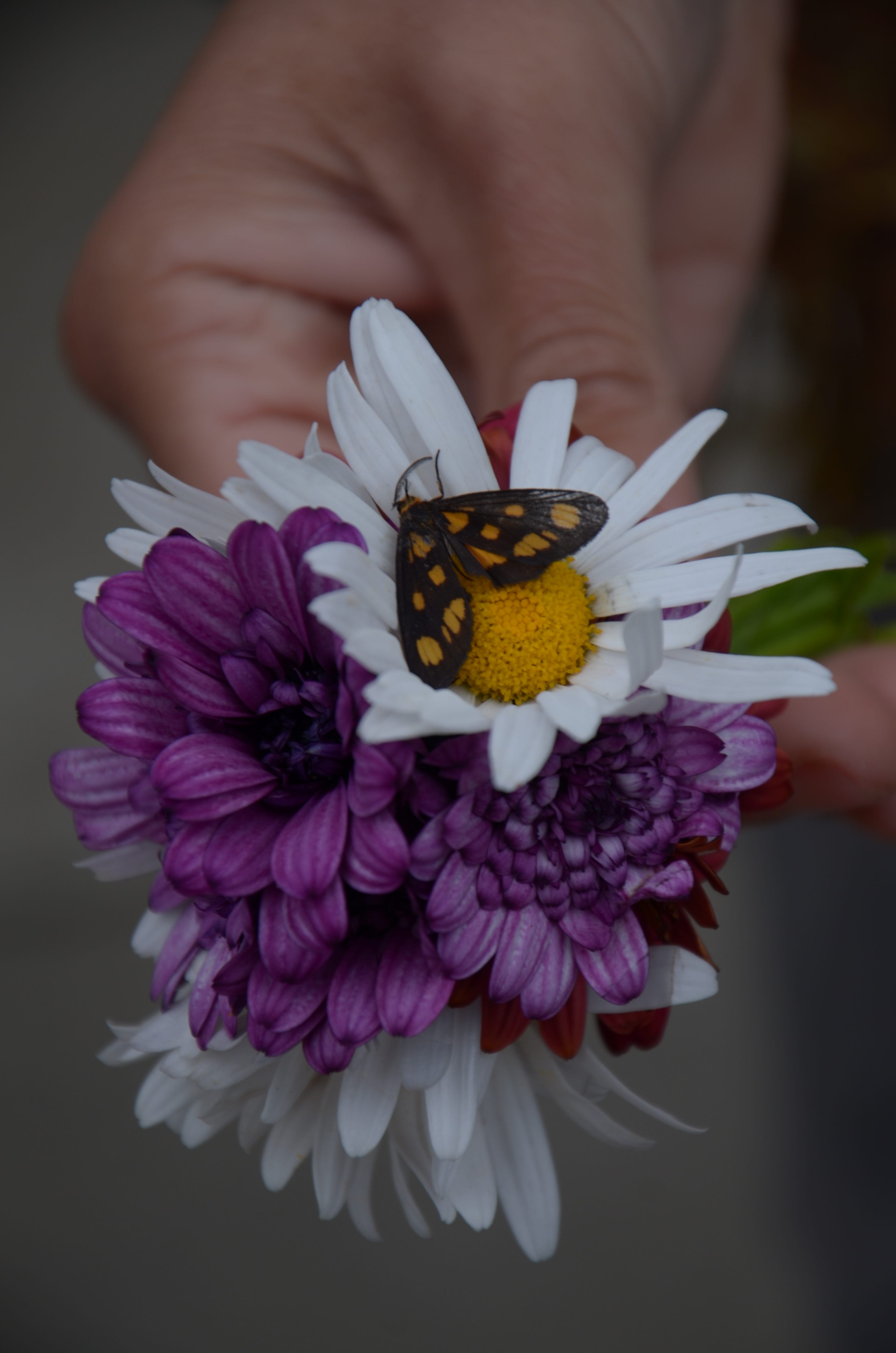
Of late, I’ve been fixated on amateur studies of lepidoptera. Watching our flock of flaneurs wander along beach trails and forested footpaths, I thought of moths as a useful role model.
We sometimes mock moths for their erratic flight, supposing that their passage through the atmosphere is haphazard or random, or poorly planned out. But a moth is following its own impulses; primarily, it is prompted by scent or by light, which lead it to what’s important in its own life. It zigs and zags according to what it calculates as the next best chance to meet with sustenance.
Curiosity is often what guides me along a track – and, truth be told, I often find that it’s impinged in group environments. But the whole premise of the trip was to support those of us who wanted to indulge our intrigue throughout East Gippsland. It might have looked, from the outside, like a gaggle of moths was flitting across the landscape.
That being said, it was also good fun to have others join our party at intervals. A group of hungry locals came for a feed of polenta and smoked mushrooms by the campfire; a geomorphologist cycled with us for a day, interpreting our surrounds where we took breaks. A long-time conservationist served us lentil soup and then gave a speech on the history of forest activism in the region. In Nowa Nowa, we were shown to an incredible work of art, the giant root base of a stringybark that had been carved into a masterpiece.
I imagined how much I would have loved to meet such people on an overseas tour, those who could tell anecdotes from another angle altogether. Then again, East Gippsland sometimes feels as exotic as anywhere else I’ve gone a-wandering.
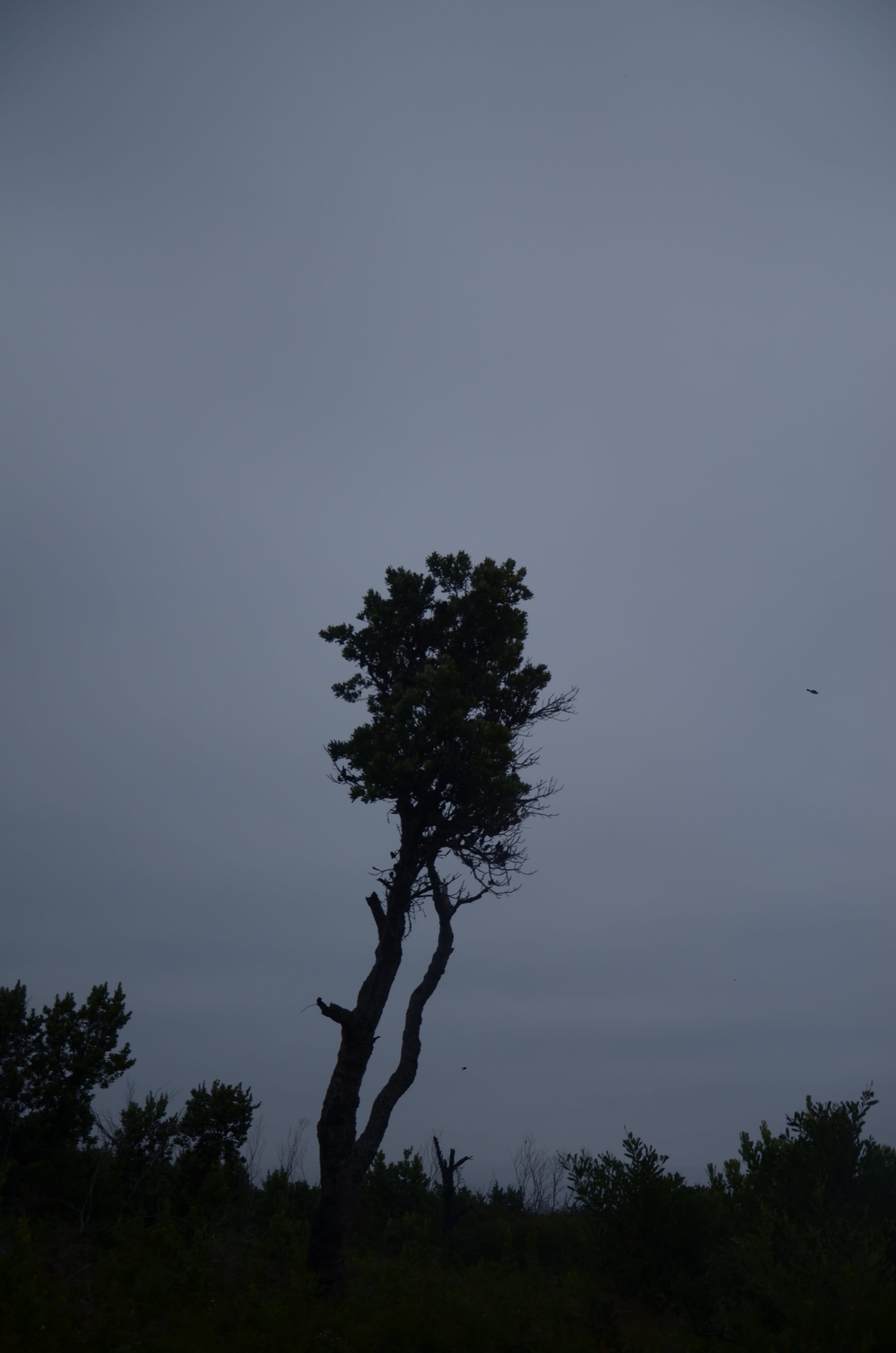
Whenever I’ve been in East Gippsland, I’ve found myself planning my return. It’s a big landscape; a person can endlessly ruminate on what might be upstream on a certain river or down the next dirt road. Fortuitously, the itinerary that was cobbled together for the Far East Flaneur filled some of the gaps on my map. Above all, that was a reason to accept the invitation to join the journey.
The chance to do a full day on Lake Tyers in a kayak was especially alluring. I’ve paddled a little bit there, but it’s a complicated body of water. If you squint at it on a topographical map, you might see the figure of a dragon; we ventured up a branch of the lake created by its main inlet, Boggy Creek, which might be the dragon’s tail.
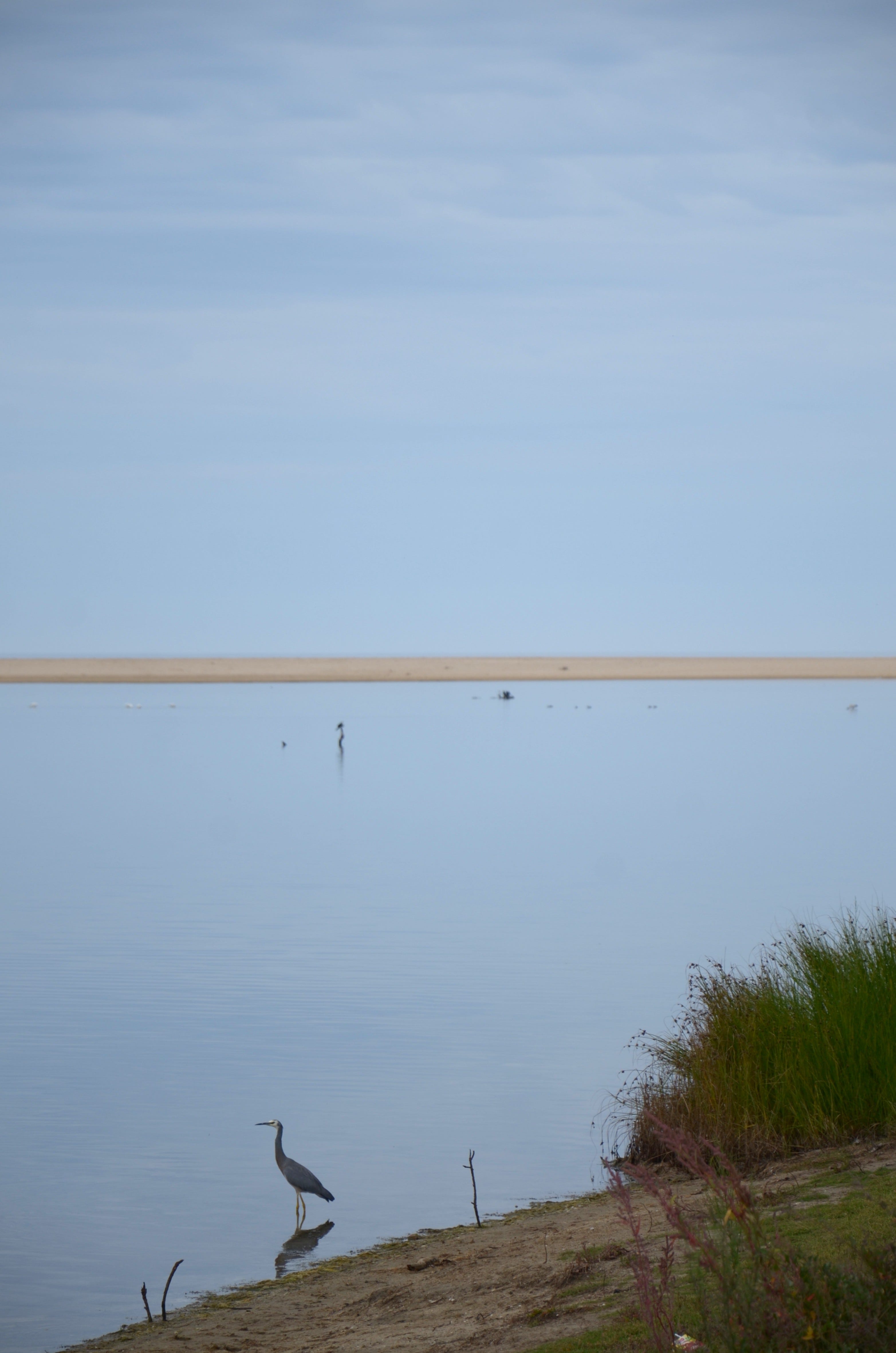
Shadowy forests reach down to the shoreline, adding to the diversity of bird habitats. Azure kingfishers chirp sharply from muddy banks; at one point, a flock of 54 black swans cruised past us, in single file (giving this birdwatcher the chance to count them as they went by).
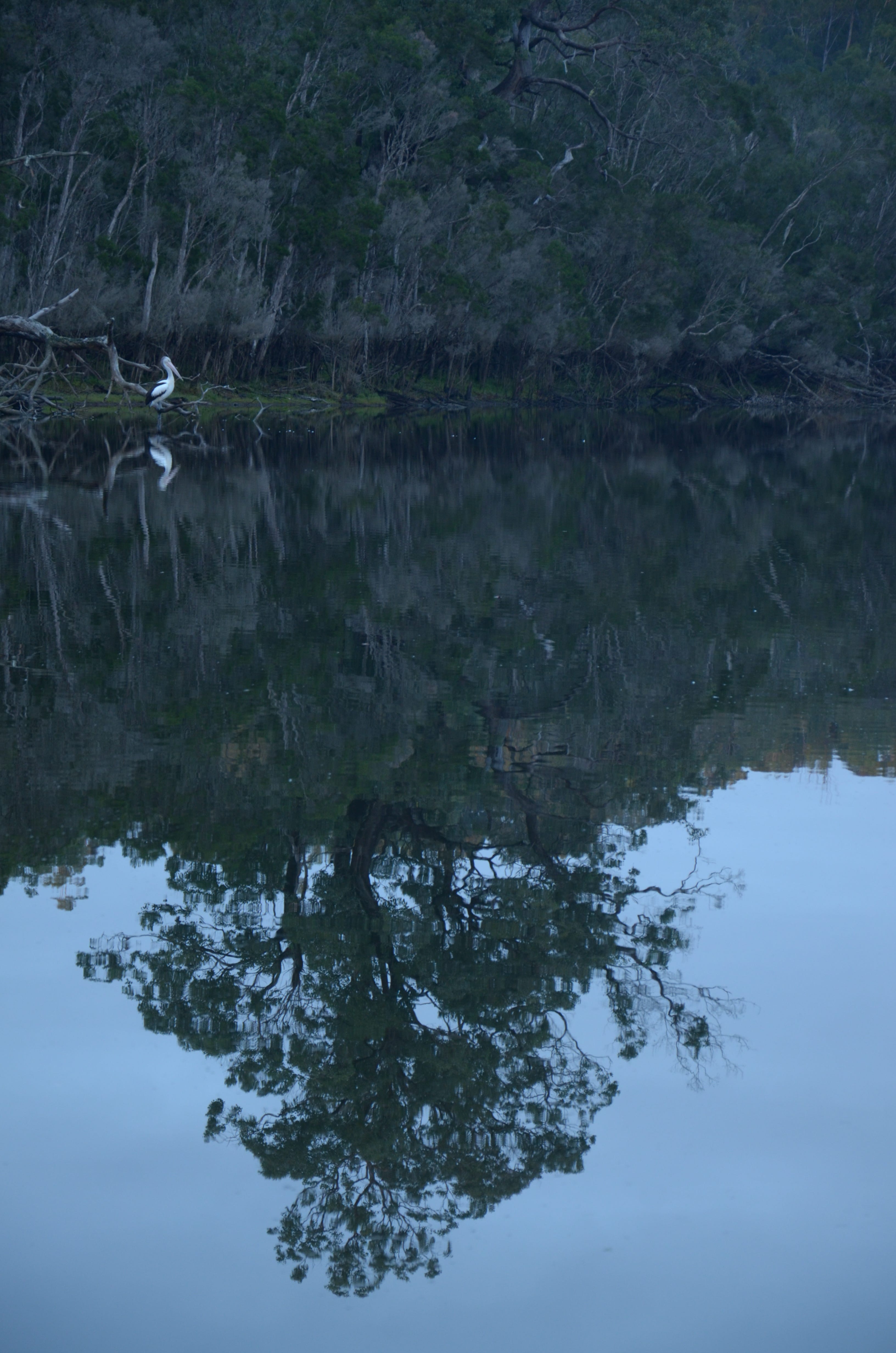
We also saw pelicans at almost every bend. Pelicans are fascinating birds: astute problem-solvers, keen observers and cunning social creatures. Of all the avian acquaintances I’ve made, none seem to have a human presence as much as a pelican.
The next day, one of our party – a Gunnai woman, Alice – told us an old yarn about a pelican named Borun, the father of the five clans of the region. He came down to the coast from the mountains, carrying a canoe on his head. The old bird knew what he was doing. The myriad lakes of Gippsland are the perfect place to paddle: once he came through the river systems, there would be no need for Borun to portage his vessel.
Alice said that as we paddled through, she gave a little wave to the pelicans and thanked Borun for his guidance.
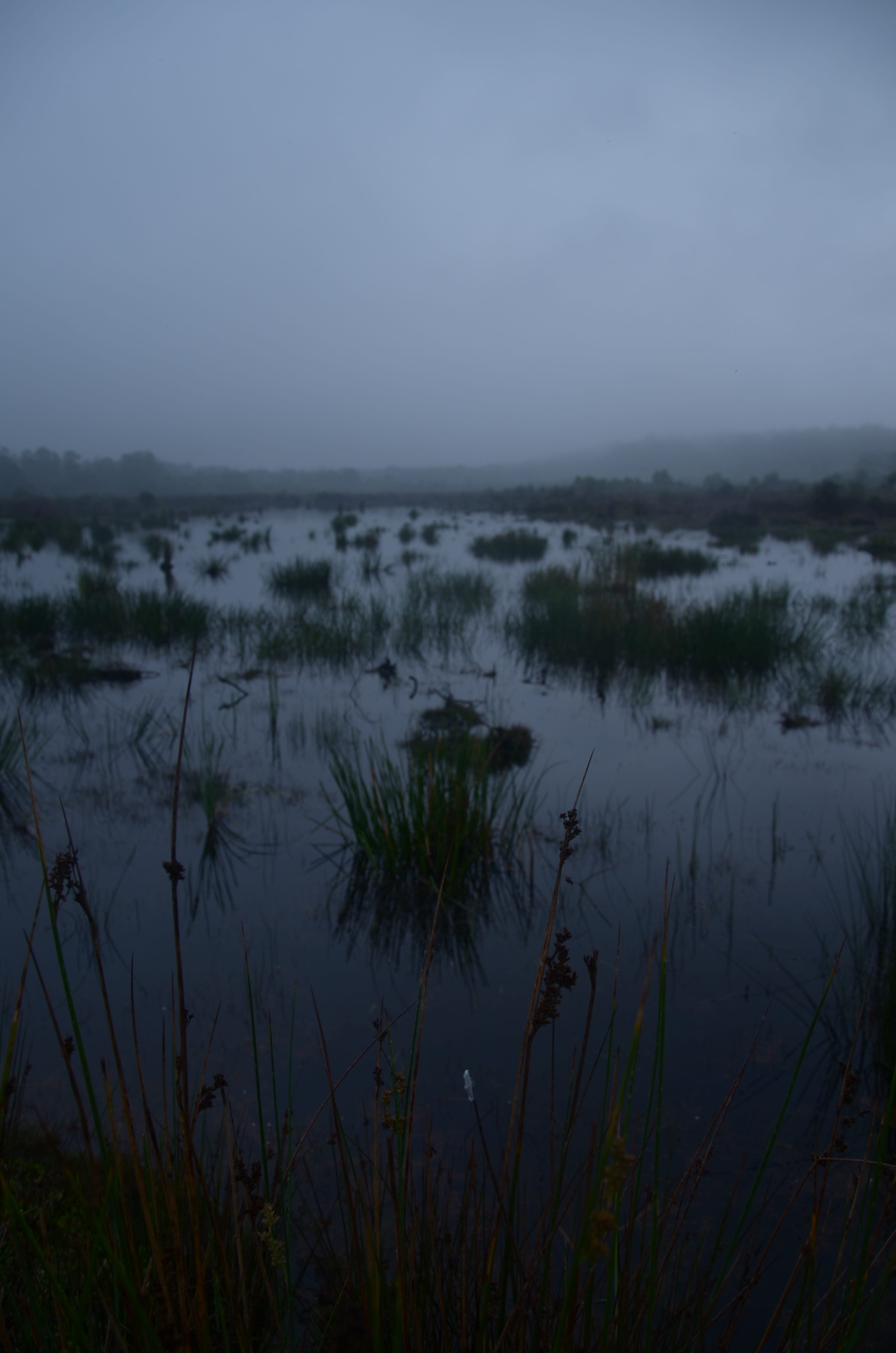
Remember kingfisher, remember blue box,
remember common psednura, remember hyacinth orchid.
Remember white rush moths that you brushed off
as you traipsed through the wetlands.
A few mornings later we sat on the banks of the Snowy River with two more local women, Kylie and Sue, who make and teach cultural arts. We’d covered a lot of our kilometres in the previous few days; it was nice to sit in the sun, having a crack at making a flax basket, as the women teased my lack of dexterity.
In the midst of this chatter, Alice made a quiet comment that chimed exactly with my philosophy of travel. “Now, when you think about this place, you’ll think of how you sat here weaving with the aunties,” she said.
It struck me that this remark was integral to a meaningful philosophy. Stories stay in place; they rise up to meet you when you visit again. The memories you bring home from elsewhere aren’t static; they are living entities and they continue to attach you with distant places long after you’ve moved on, as if with the electric fizz of fungal filaments.
To cultivate these connecting threads may be the only good reason for travel.
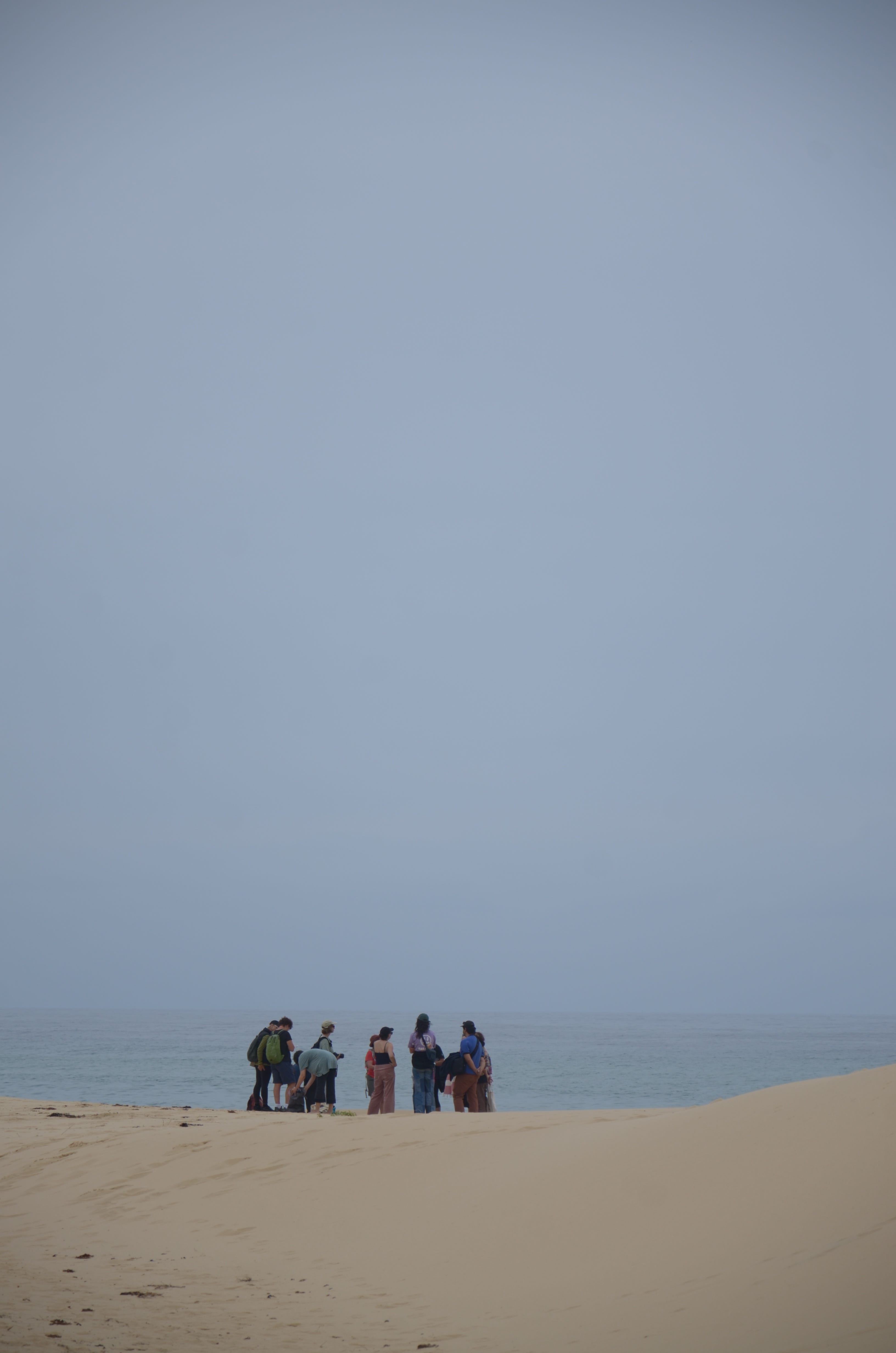
This month’s Far East Flaneur trip was the pilot of something akin to a tourism offering. At the end of our time together, an inevitable question was raised: how do you make a business based around this simple premise, the invitation to drift lightly through a place?
If I was asked to describe my favourite part of the week, I would say that I most enjoyed the morning I spent out in the drizzle near West Cape, in a section of the itinerary that had been left blank. I strolled along a fire trail, not entirely sure where I was, inspecting moths and frogs, flowers and wasps. When I reached the road, I found that I was standing beneath a family of gang-gang cockatoos that grizzled in the branches, oblivious to my appearance.
I have rarely seen a tourism experience try to provide for whimsies like mine. It’s hard to incorporate into a cost analysis, but FLOAT seems willing to allow for the intrinsic value of poetry, community and closeness to nature. Which sounds rather ambitious, but also pretty simple.
A cockroach the colour of a rich red wine. Five wonga pigeons flapping into the forest. A damp, fungus-riddled tree limb that fell through a Peugeot’s back window.
I left the trip with my notebook chockers, more observations of how the landscape in the far east is tightly embroidered with diverse plants and critters, draft stories and snippets of overheard conversations. These scribbles, more than anything, is what tells me I’ve been on a meaningful journey.
I also left with a map of a different part of East Gippsland, a chart on which I can begin to plot my next journey out that way. As far as I see it, that’s the nature of that country. It quickly becomes a distant region, beyond arm’s reach and difficult to visit.
The memories remain vivid, however, which is what they do whenever you intend to come back to the places that gave them to you.
Love the word 'flaneur' and am glad a 'flock of flaneurs' can still exist.
It’s interesting that there is a thought that this walk could become a possible commercial venture. I think all your wonderful observations show that it is best done unencumbered and alone. In aloneness you really ‘see’. Great descriptions!