
Insect Almanac

(If you’re into this writing, you may also enjoy the hour-long audio recording of insect stories I have recently produced - it’s here.)
The other week I was chatting with all-round legend Hannah Moloney. I had my pocketbook open – with its tiny, mite-like print – and placed gently on it was a dead butterfly, a meadow argus with its orange wings spread. “That’s the picture of your life,” Hannah grinned.
It’s not a bad summary of my summer. I have passed the season in pursuit of butterflies. Nearly forty species can be found in Tassie, but back in spring, I reckoned that I only had a superficial acquaintance with all but a few. It was time to entwine my story with some more butterflies.
This saga started in October. One afternoon, restless, I climbed a nearby mountain. As I sat at the trig point, a butterfly generously settled down on a dolerite boulder to bask with its wings outstretched.
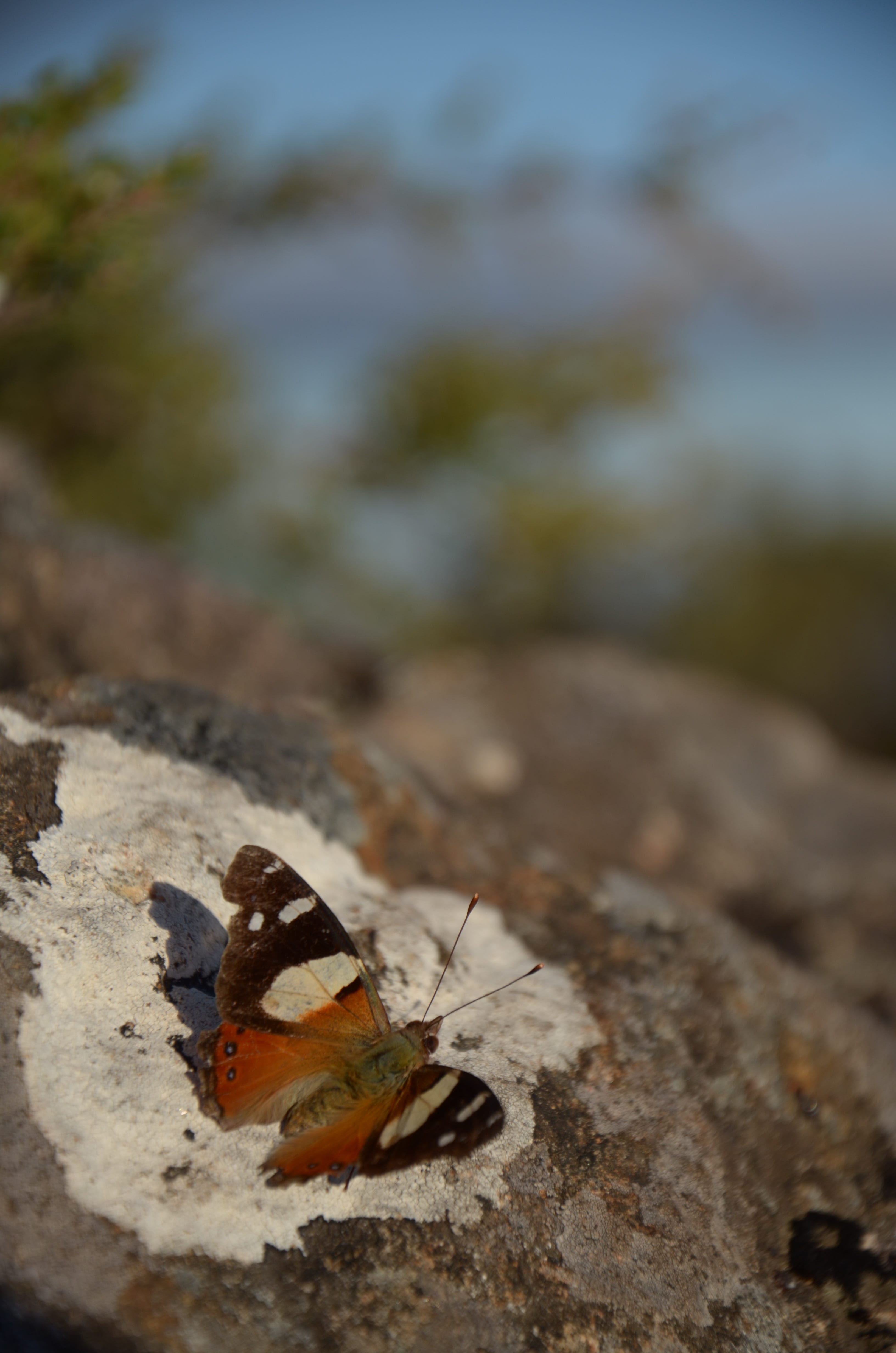
Those wings were beautifully mottled, in colours similar to those of the rock and its cast of lichens. It was a creditable camouflage: perhaps I’d have skipped over it if I hadn’t seen its exuberant flapping first. I quickly identified it as an Australian admiral, Vanessa itea, For weeks afterwards, I saw the same species zooming around, at close quarters – sometimes cruising so close to me they nearly clipped my noggin.
A parade of patterned wings has followed. There have been special moments with spectacular butterflies and at times throughout the summer you may have stumbled upon me squatting - or else on hands and knees, with my arse in the air – trying to count the spots on a specimen’s underwings. Alpine shrubs offered encounters with mountain-blues; a certain creekline became associated with the endemic leprea brown; most recently, I have walked through clouds of silver xenicas.
All these months later, the body of the meadow argus had been found in a dusty field. Like a proud child, I showed it to Hannah Moloney.
Down the road from my little woodland abode, the meadow argus can be found doing its merry jig among the straw-like grass on the verge.
If you were to ask for my core belief – a credo or sacred motto – I might answer with this line of the poet Mary Oliver’s:
“If you notice anything,
it leads you to notice
more
and more.”
It is fittingly from a poem called ‘The Moths’. For a long time now, I have considered moths as precious – a perception that I gleaned, perhaps, from a Chilean friend once telling me that the ‘dust’, or scales, of moths’ wings were sacred. I’m not sure if that’s a cultural tradition or a personal belief, but it has been a lens through which I’ve watched moths since then.
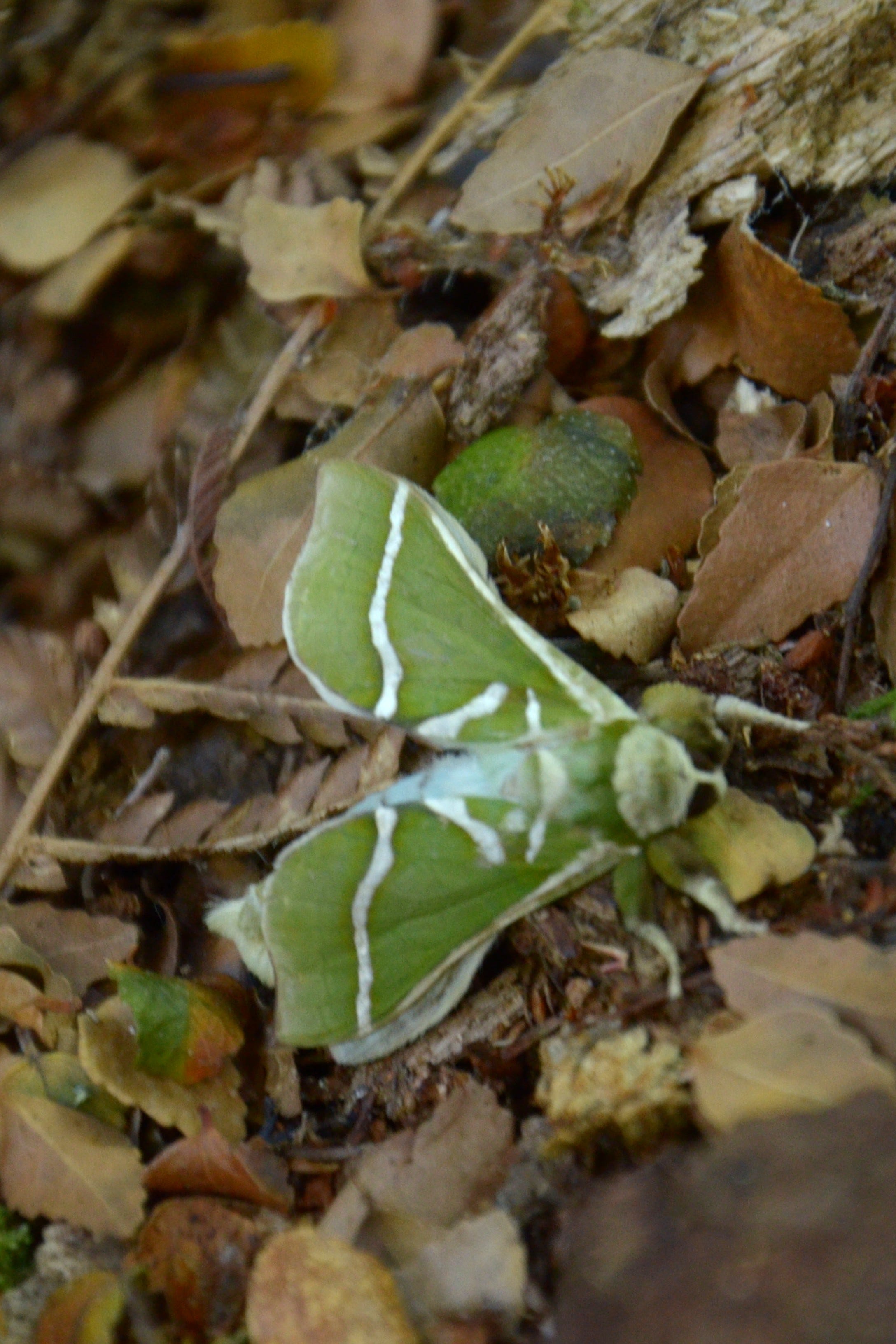
This summer I’ve become enamoured of the small coterie of moths that wear green wings. The other night at a campground, I watched a gum emerald hitch a ride on a shoeless bushwalker’s big toe. Another evening, wandering in a neighbour’s forest, I noticed a species I’d never before seen. It’s known as the Tasmanian splendid ghost moth.
Such pretty-patterned critters are hard to look past, but I have long enjoyed how studies of minutiae lead you to new observations. Change your focus and you will see something else of interest: moss, markings on bark, fungi, frogs, eggs, a chrysalis.
A side-effect of this belief is that I have now gathered several piles of bric-a-brac from the bush, a Wunderkammer of what warrants a closer look. Nothing was deliberately harmed in the name of amateur science, but the collections feature many insect carcasses.
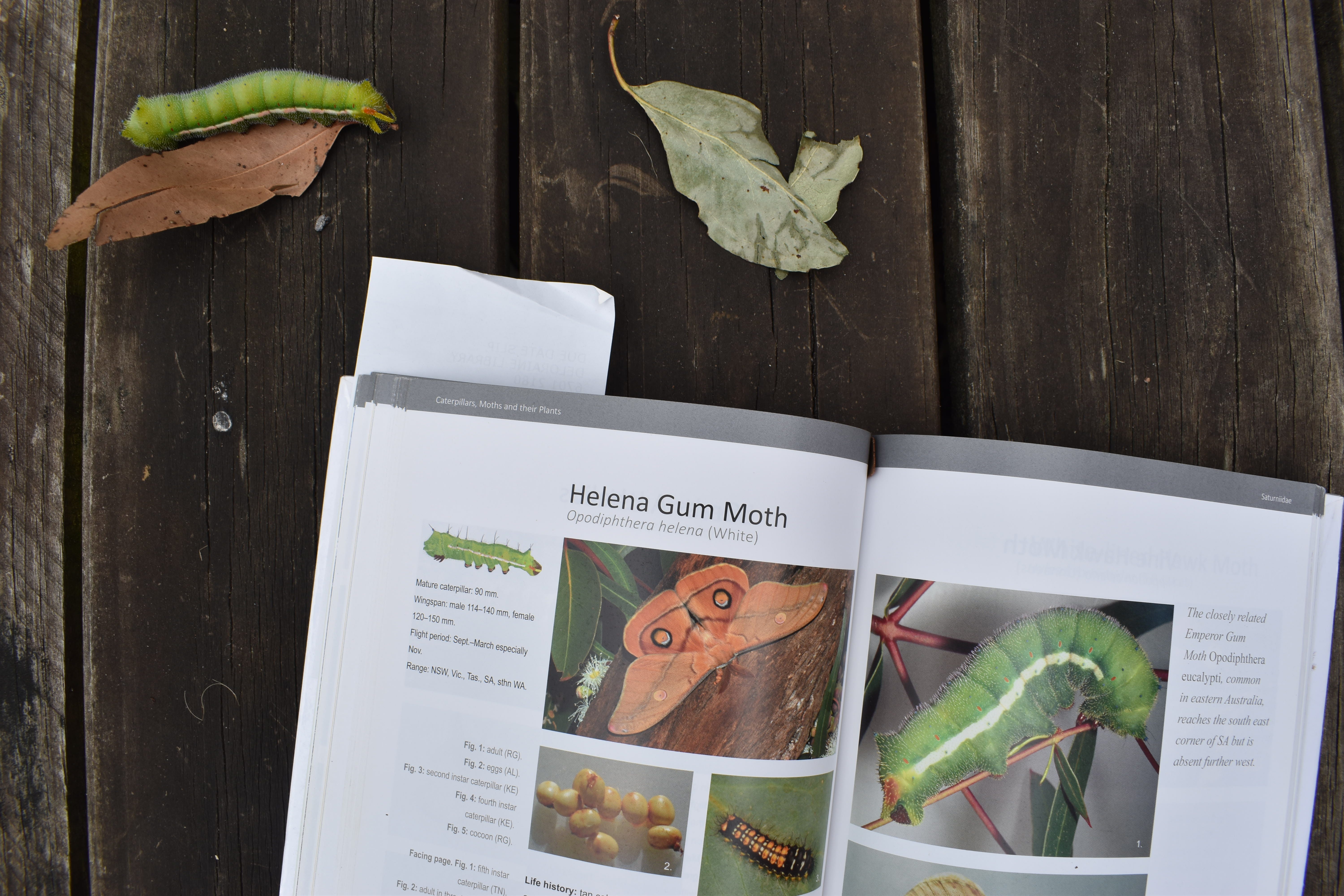
Early this month I also chanced upon a green grub, a caterpillar heavyweight that slithered calmly across a clearing of dun-coloured grass. The larva of the helena gum moth, it was speckled with cobalt dots, like moles, each with wiry hair sprouting from it. It is one of the most arresting animals I’ve ever seen. It’s like coming upon a snow leopard.
My awareness of the life-cycle of insects slowly grows; it’s an ongoing education. As a child, I might have been introduced to the basic gist of things but I had not yet realised just how much of what I meet in the woods here is in the throes of change, a flux of forms.
The vast majority of insects undergo metamorphosis. It evolved so long ago – among the first insects, basically, which is recorded at 480 million years ago – that we should probably think of it as more normal than our own process of maturation. But while some critters are prepared to unpeel themselves from the husks of their previous selves in plain sight – in broad daylight – most metamorphoses are hugely mysterious undertakings, as if the insects have grave secrets to keep.
I have been wondering about the history of the relationships between humans and insects. Among our planet’s diverse communities, who were the first individuals to see the connection between grub and moth? How many generations passed before the early scientists pried open a cocoon or chrysalis, before someone dug up a cache of ants’ eggs and crouched there long enough to be able to explain what they witnessed?
Perhaps I’m thinking primarily of the storytellers who spoke at night around the campfire, describing the wonders of the neighbourhood. Insects were surely central to many stories. If they have faded from modern-day folklore, it’s because we have tried to create, with our enclosed homes and expansive cities, places that are distinctly not habitat for beetles or craneflies or cockroaches.
Gardeners are still good observers, amateur entomologists. They cheerfully use the term “beneficial insects” and are mighty familiar with those that affect their harvest. (My own failed attempt at raising a humble garden in the bush was a chance to observe which larvae hacked into kale and which chewed up the chives.). Various insects are also woven through the ecological wisdom of beekeepers and fly-fishers. I often turn to these types if I want to discuss mites, gum beetles, mayflies or mole-crickets over a beer.
Then there are those who devote themselves wholly to entomology as a line of work. I recently read the memoir of a scientist named Simon Grove. Seasons of the South has all the hallmarks of writings by keen-eyed, kind-hearted British naturalists – tangents galore. However, Grove moved to Tassie yonks ago, so his reminiscences are set in familiar environments. I picked up a lot as the author yakked about his fieldwork, linking insect species with particular sites.
Simon Grove isn’t oblivious to the fact that the entomologist’s activities can look, from the outside, like the recreation of a madman. He tells stories about wildly swishing nets or kneeling in the mash of a rotten log, to the consternation of the general public. I have thought the same, dawdling through a field, eyes cast downward as though I’d lost a set of keys, when in fact I’m just hoping to see a reed bee or spotted grasshopper.
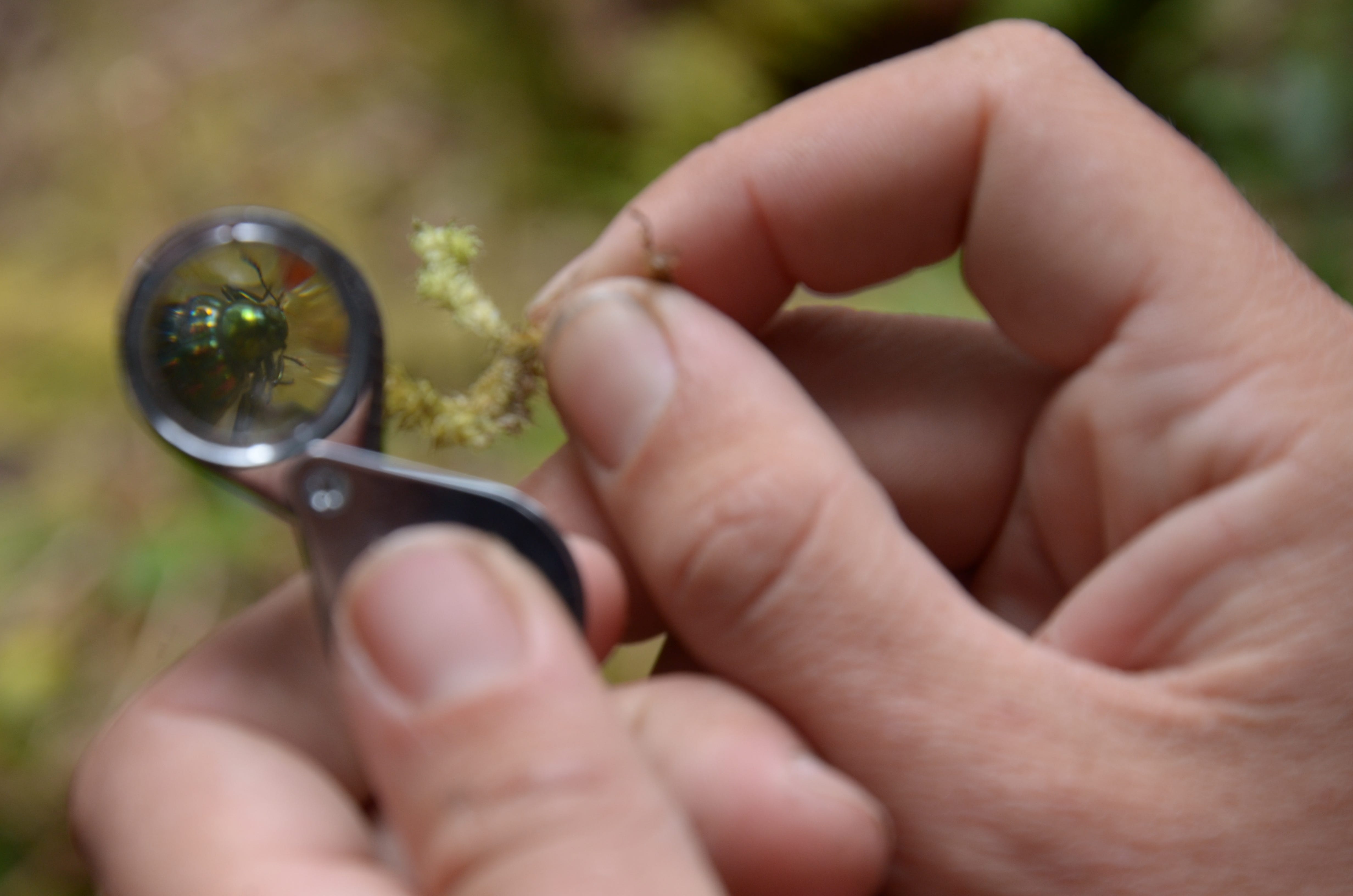
Years ago I had a video camera with a macro lens, and found myself sprawled across a walking track, filming a trail of ants. The recording also captured a conversation with a passer-by, in which I pretended to be a sort of adolescent David Attenborough to try and justify my bizarre position. I am not sure how convincing an act it was, though perhaps I am mutating into something more like it these days.
In Seasons from the South, there’s a passage about how the study of insects is a type of meditation. It brings a person directly in touch with their senses, outside themselves. In a time when reading the news can induce a mental breakdown, it’s good to look at a bug or a cranefly. I don’t suggest that you lie prone on a public walkway – I too have lost the knack for such a complete lack of self-consciousness – but wonder is a good antidote to worries, fascination can balance out fear.
What I got from Simon Grove’s reminiscences is that a life is much enriched by interactions with insects. In a few more words, he echoes what Mary Oliver wrote: if you’re interested in minutiae, you will never be bored. I think back on my travels as a younger man and wonder where I might have got to if I’d then been willing to follow the impulse to peer intently at stick insects or weevils.
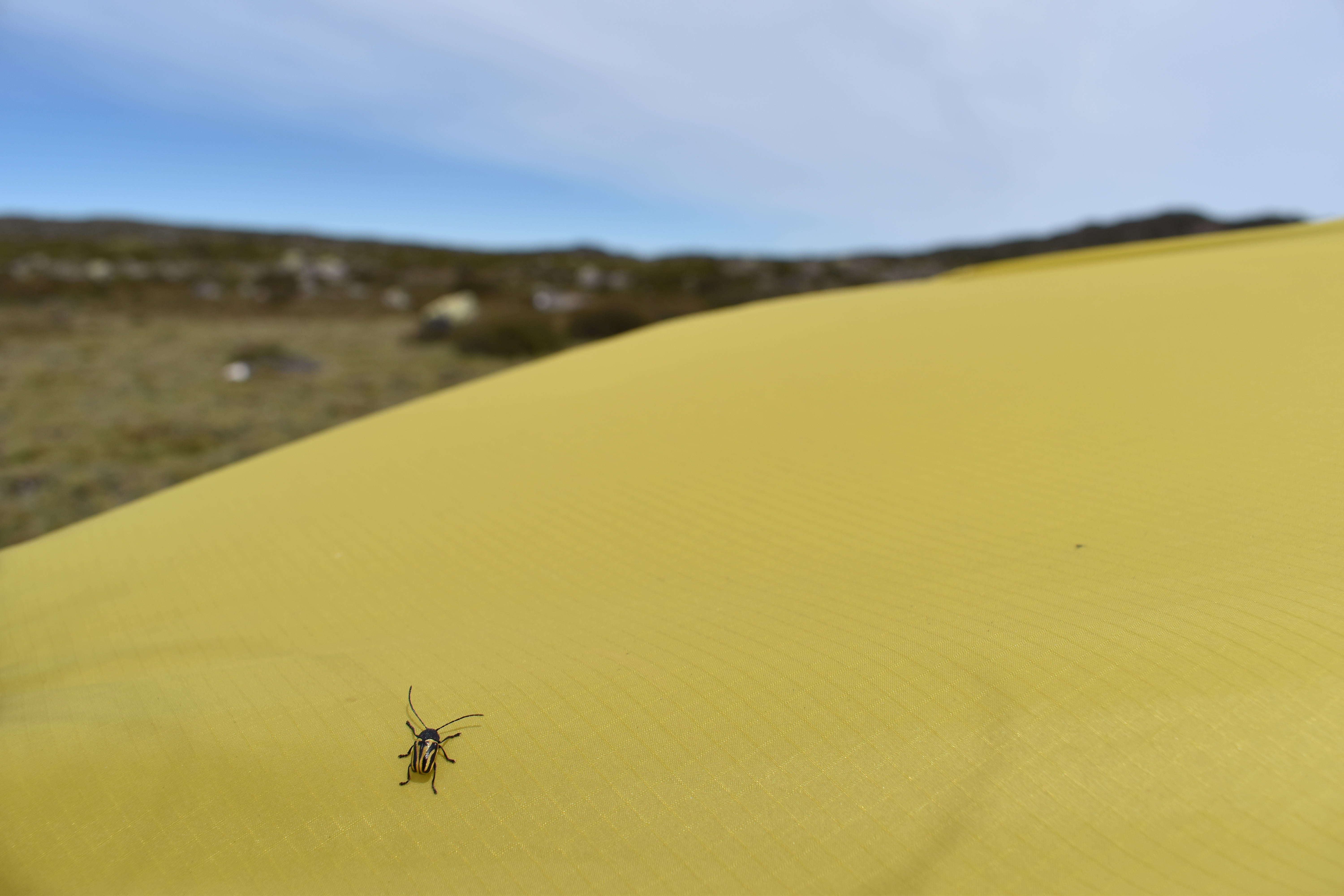
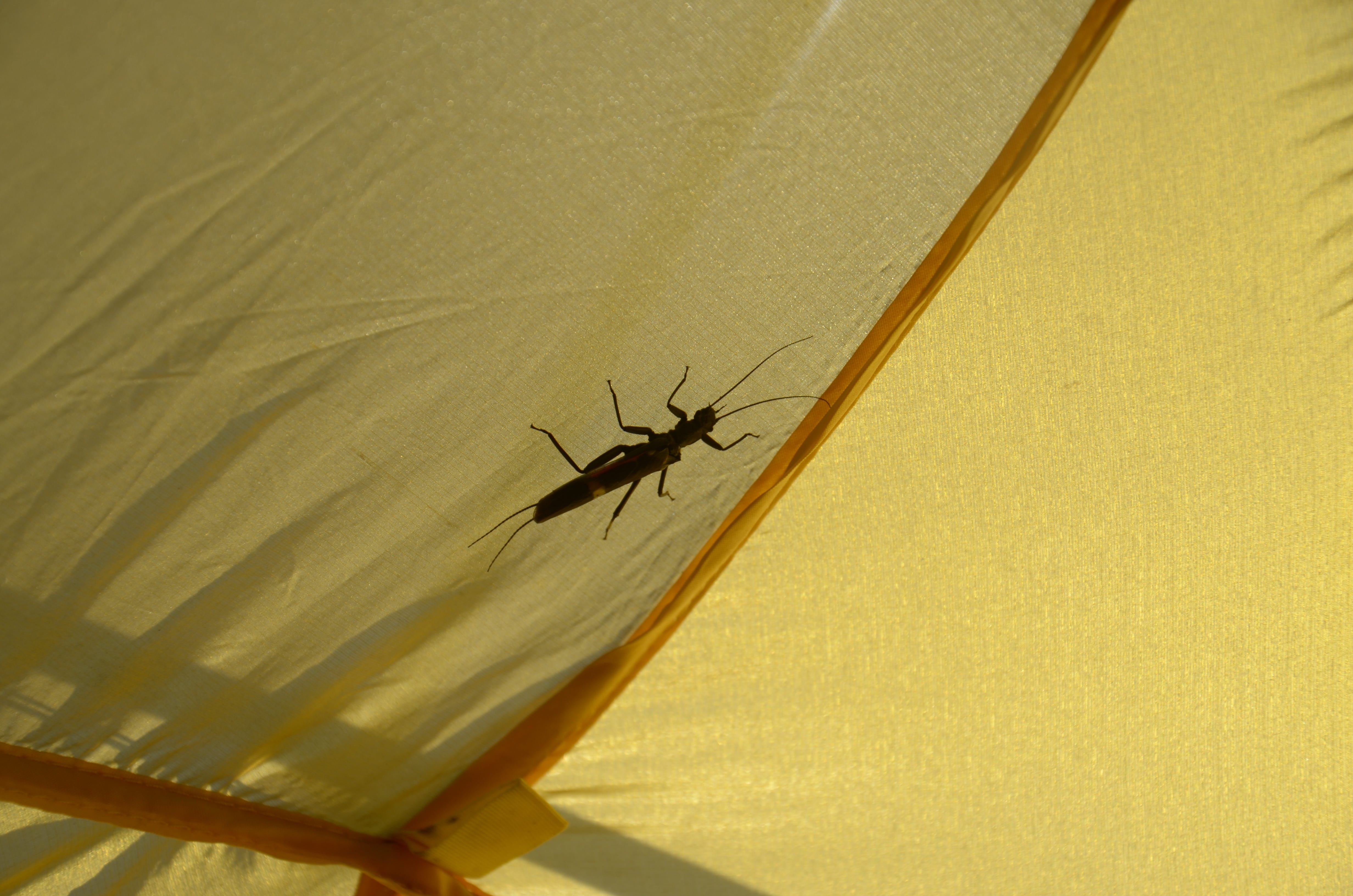
As you may know, I’m a squatter in an old train carriage that is kitted out well enough that I can stay here comfortably – even though it’s missing certain modern conveniences. It is poorly insulated and has many apertures through which insects can enter. The other day I woke up to find a small, pretty cockroach – bronze as a sunbather – making a tour of the room.
Sometimes I record yarns here, my voice accompanied by the choir of the bush. The birds make their charming contributions; but so too, at this time of year, do the blowflies. Insects intrude upon the recordings. They’re so eager to be involved that as I sketch out my stories about them, they realise that they are protagonists and force changes to the scripts.
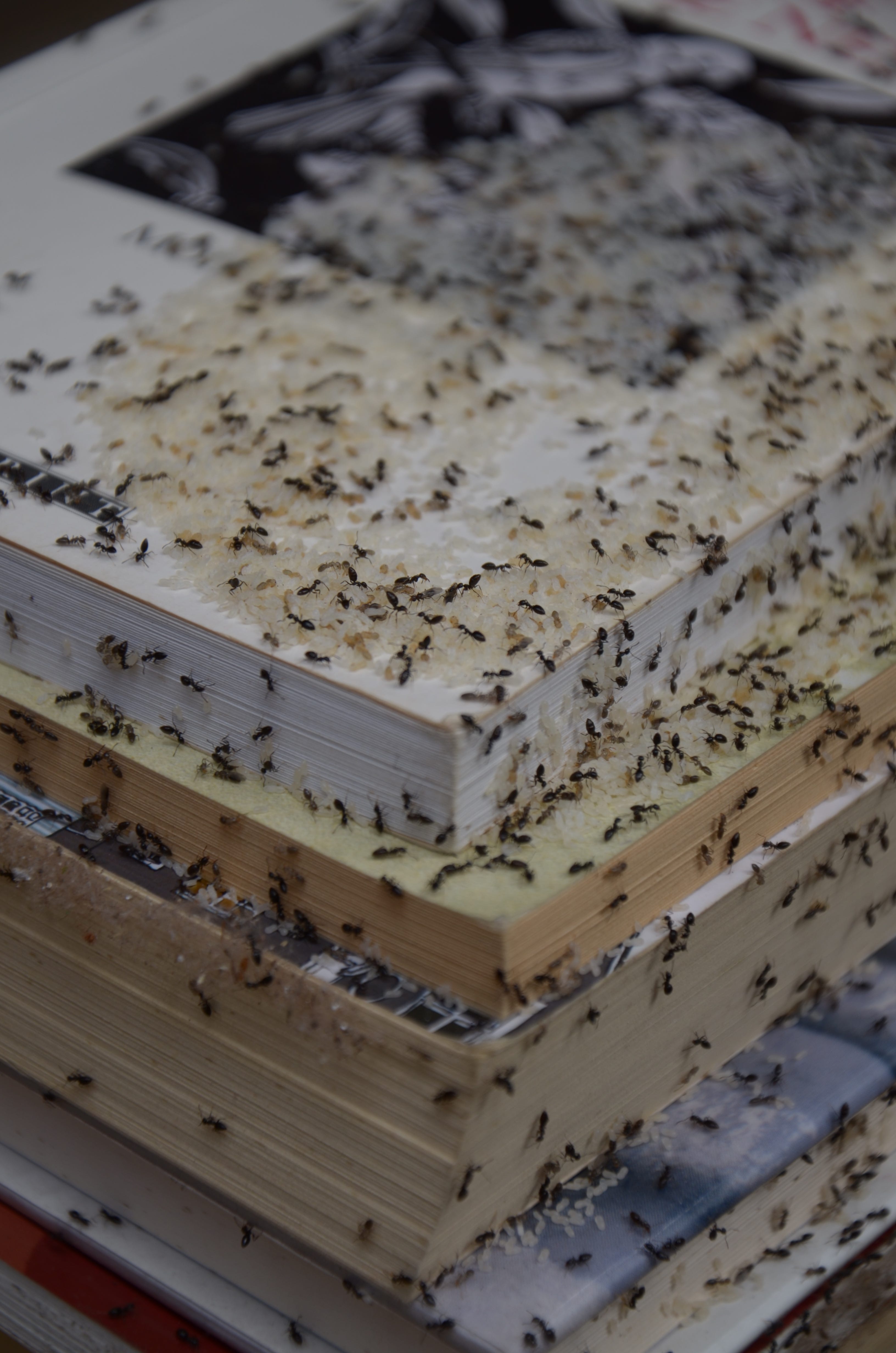
One species that I mentioned is a type of ant, minuscule but abundant, that comes and goes throughout the summer months, climbing through the timber lining of the cottage in which I sleep at night and laying eggs on books. This summer, however, they came and never went away; the ants massed and I began to wonder if the ceiling might collapse under the weight of all these tiny beasts and their endless offspring.
Another story was about the mud-dauber, a pretty native wasp that also likes to find a cranny in which to raise its young’ns. Its nest, however, is an earthen cell, like a small adobe hut. The mud dauber also has a preference for using my books as its base. I have, in the past, swatted off the half-constructed nests as I found them, until I got the guilts one summer because I saw the mud-dauber return, looking lost and aggrieved.
A fortnight ago, I was rearranging a book stack and pulled out a mud-daubed edition, accidentally breaking the clay case. What also spilled out was a number of spiders, which had been paralysed by the wasp and transported to the nest. One specimen had a tiny silver grub hanging off it, the wasp larva having a feed.
We may question the morality of these wasps, but insects’ ethics differ to ours. Mortality, too, must take on a different meaning for these creatures, allotted so few days in fresh air. It’s little wonder that some beetles or butterflies, in flight, look as if they haven’t got around to plotting an itinerary. Yet studies of the European honeybee suggest that insects’ lives “are not only shorter, but denser” – they experience “more events in an hour than humans do”. The tone of their existence is one of urgency and hyperstimulation.
The other day I saw a rain moth, battered and bruised in broad daylight. After years underground, these emerge in adult form for about twenty-four hours; naturally, I thought the inert individual outside my sleeping quarters was no longer with us. But when I tried to scoop him up with a leaf, he swatted at me with his wings. I went out there at intervals; the big guy kept making these miserly efforts to defend himself. A while later, he’d vanished.
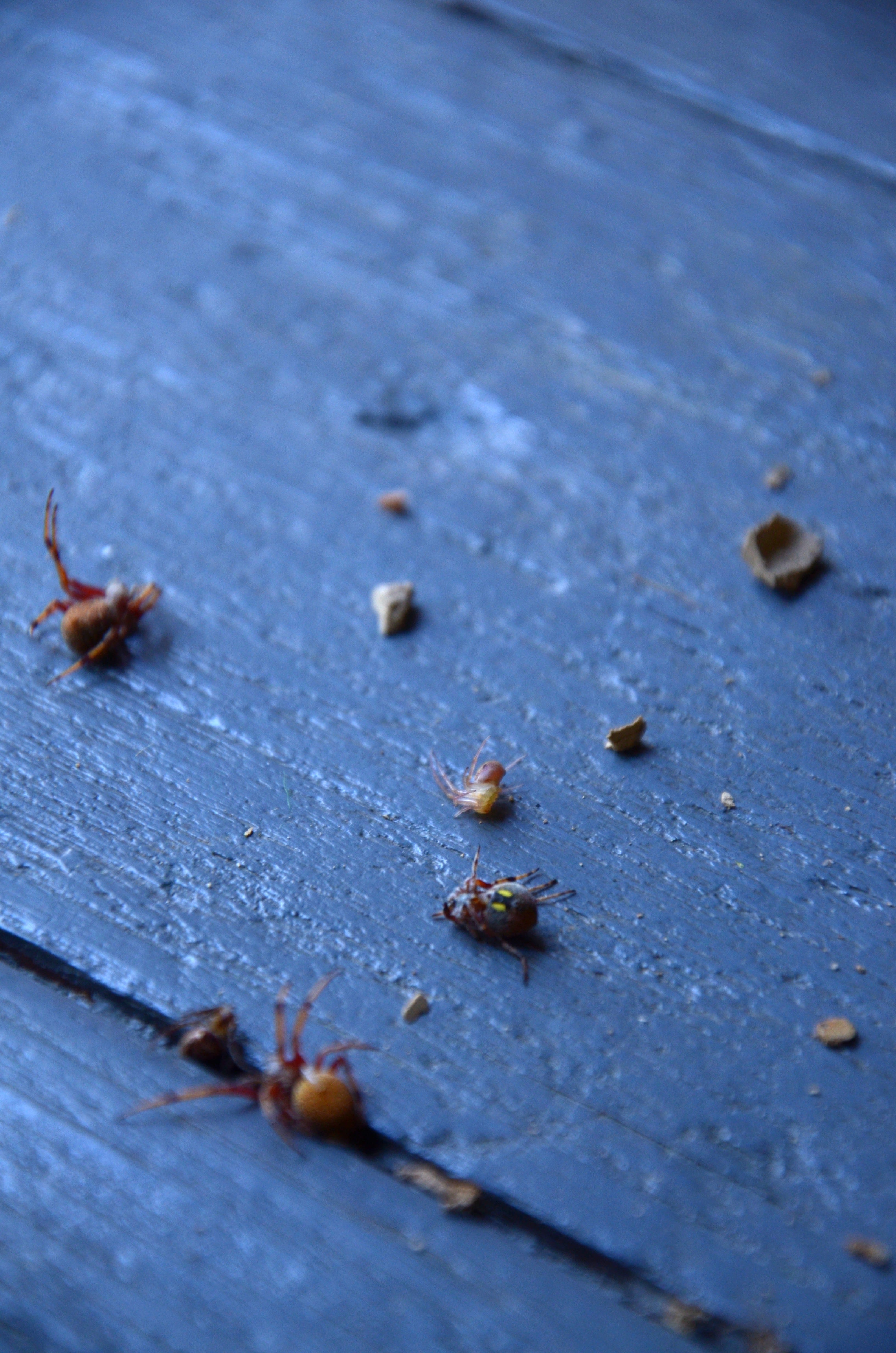
Countless mysteries remain. Six-legged creatures land in my lap; for many of them, I have no name. I can’t say where they’ve come from – they’ve arrived seemingly ex nihilo, with no stories to tell.
Still, we share the same place and time. That’s enough. Last week, I went back to the mountain that I’d wandered up in spring – when, in the wan sunlight, I saw the season’s first butterfly, basking on the lichen-mottled boulder. It seems that whole life cycles might have come and gone since then. Myriad butterflies, moths, beetles and bugs have grown up and then carked it. Hopefully, they’ve mated in the meantime; they now conk out and crumple, become part of the biomass. They make the forest that clothes the mountainside, feed their fellow-citizens in the bush.
It was a sunset ascent but even so, the evening warmth was more potent than on that afternoon five months ago. Attaining the summit, I yet again saw the same butterfly species – the Australian admiral – with its admirable outfit, showing off that patterned swirl of cream and ochre and charcoal on its outstretched wings. Like me, the butterfly was appreciating the waning daylight.