
The Hunt

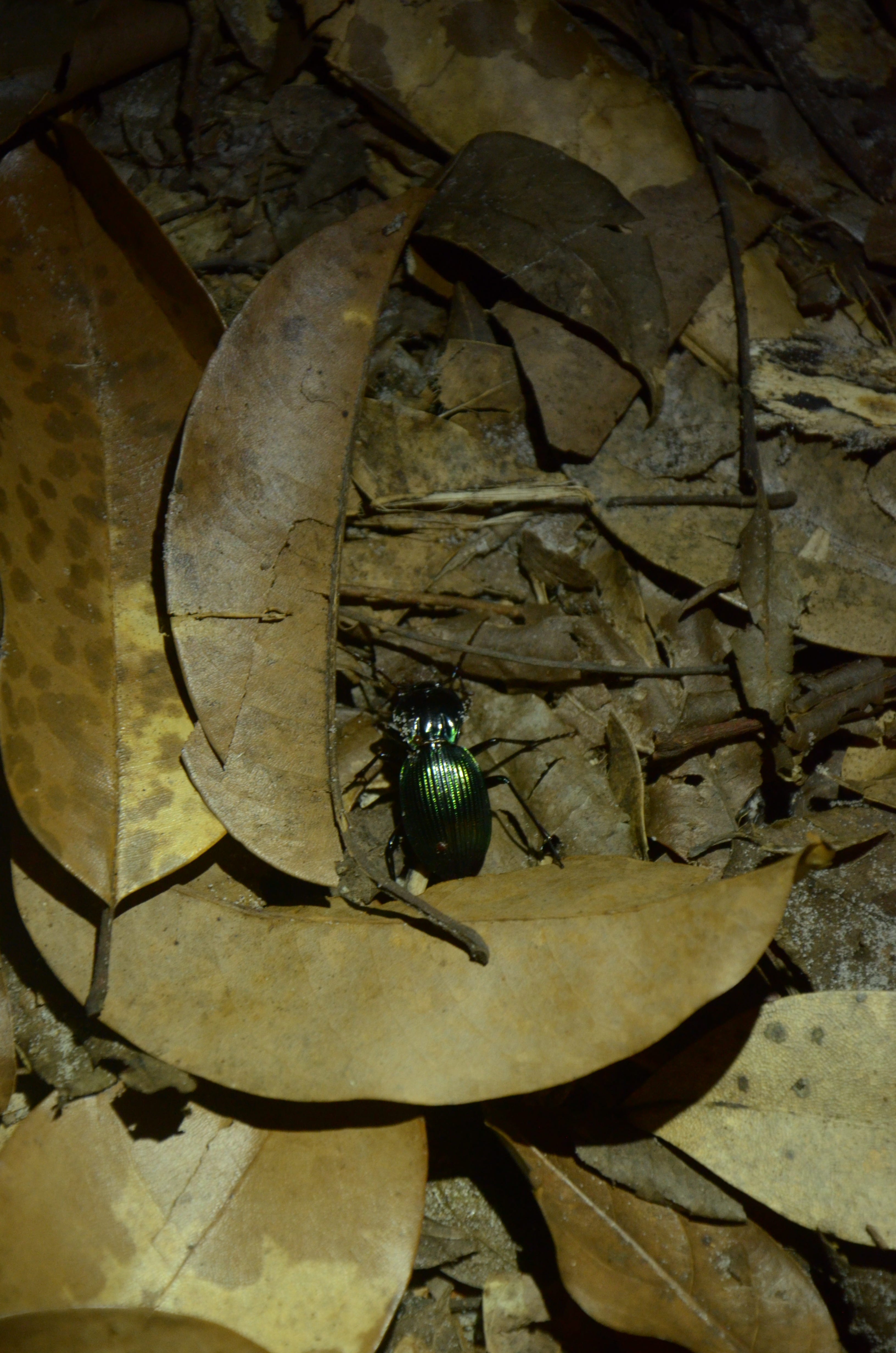
I hear scuttling and swing torchlight towards the sound. The floor of the rainforest is covered in broad leaves that have been shaken off in summer storms; under my headlamp’s high beam, all of them are white. But sticking out from a batch of them is the arse end of a large scarab-like beetle, bottle-green and sparkling; it has buried its face away from danger, showing only its armour to the luminous monster looming over it.
Walking to the campsite that afternoon, I’d seen the grooved elytra – the beetle’s hard, shield-like forewings – and wondered what the rest of the critter looked like. Now I see it up close, its six feet tap-dancing on the leaf litter as it tries to bury itself deeper under cover.
I see the big green ground beetles everywhere as I wander, exploring its neighbourhood by night. The earth is alive; the trees are busy too, with spiders, snails, millipedes. I try my luck with my camera. Not all the snapshots come out – my portrait of the green beetle is unflattering – but they are at least useful for research purposes.
Later, I look up the beetle’s name in a field naturalist’s catalogue. It is most likely Pamborus cooloolensis, a species that wouldn’t be found anywhere else.
This was at a rainforest campsite in Cooloola, where I recently went for a five-day bushwalk. A place full of wonders. One of the first things I ever learned about it was the existence of a rare endemic insect that is known as the Cooloola monster. This curiosity of evolution is loosely related to crickets, but is so distinct that it’s categorised in its own family, the Cooloolidae, in which it lives alone.
The Cooloola monster didn’t appear in scientific catalogues until 1976 (although I’m sure the Kabi Kabi people knew about it, had anyone thought to ask), when it was accidentally dug up. Over time, it has been determined that the monster lives primarily in sandy soils, predating on beetle larvae and other small insects that subsist on the roots of casuarinas trees.
It sometimes appears above-ground – even throughout the day – but I figured the best technique was to crawl insect-like along the ground, scooping up the rich soils and hoping to disinter this huge, rare bug. I did not. But as is often the case, much else was found at a tangent to my original search.
Though one evening, returning to my tent after an hour of rummaging in the sand and dirt, I squinted and saw a tiny scorpion, in a mottled camouflage, and realised I was probably lucky not to have copped a nip from the pincers on its poised tail.
To play this game, you don’t have to be too far out in the sticks. Before and after my Cooloola bushwalk, I went out in suburban Noosa. The results were no less interesting; the warm autumn nights encouraged the business of insects, much more than what I have seen when I’ve been out late in cold Tasmanian nights. (Although in summer, shining my torch around the forest that surrounds my sleeping quarters, numberless moths descended upon me.)
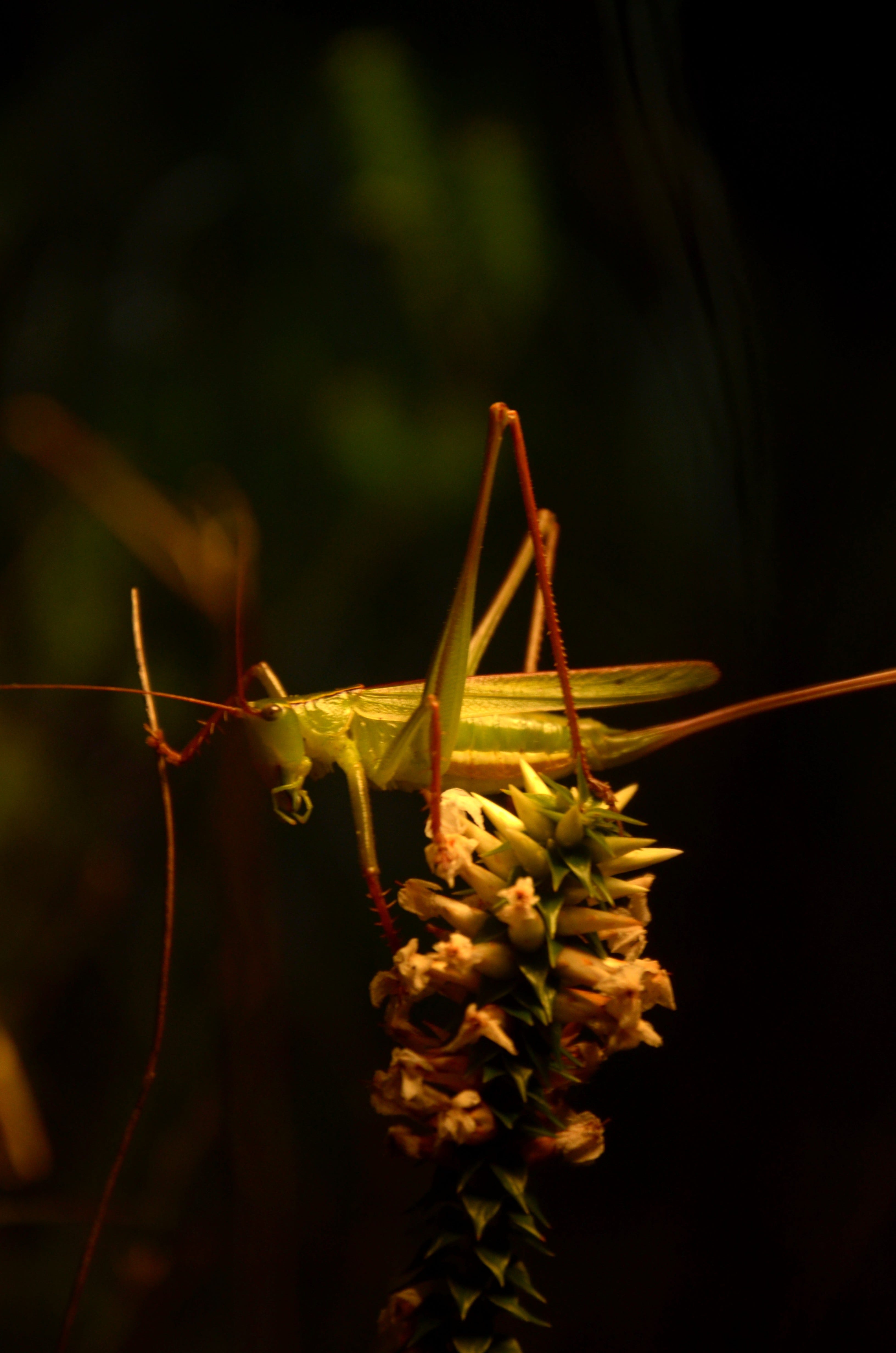
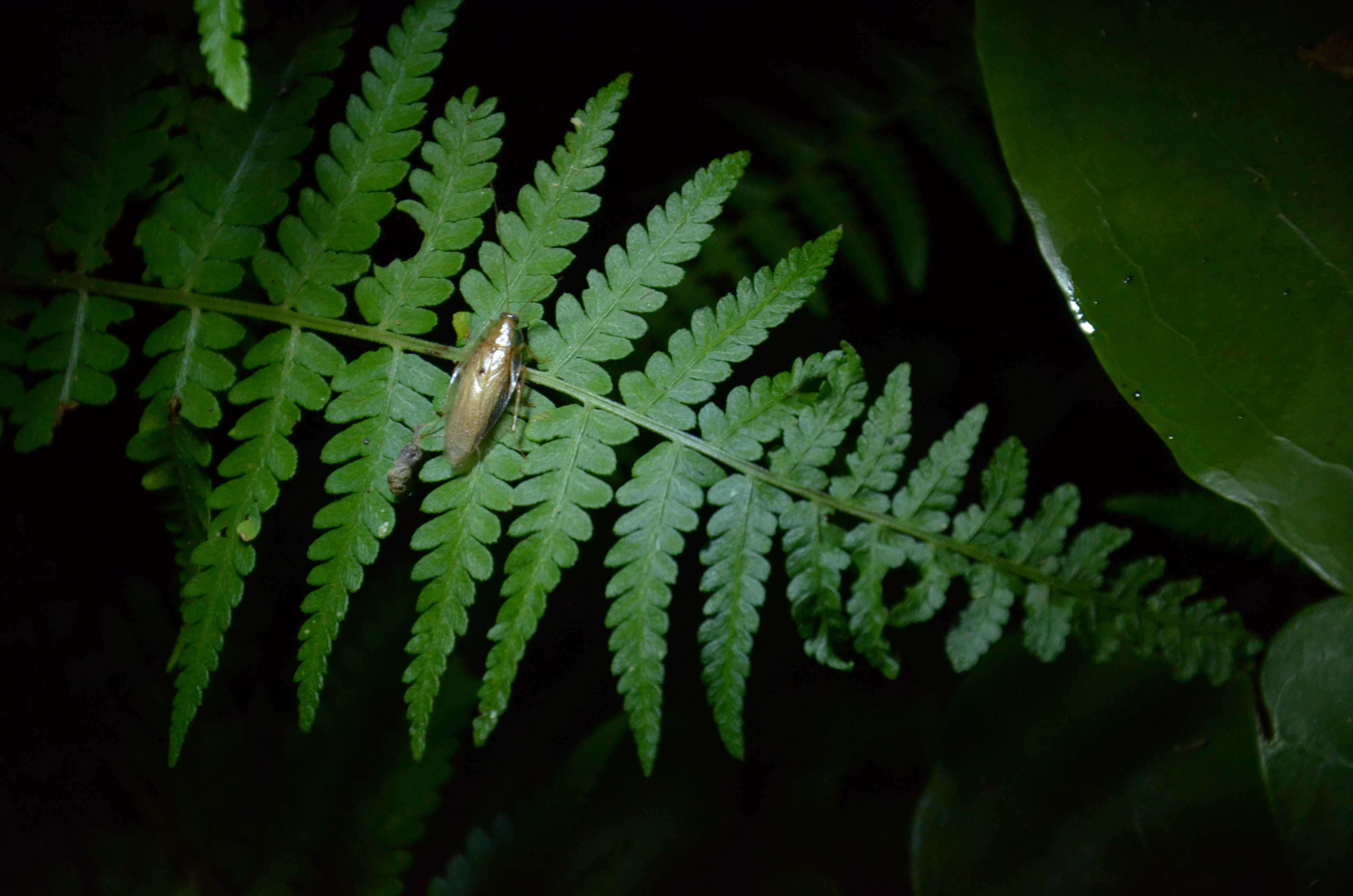
I was especially drawn to a species of cricket that perched on broad leaves. It had enormously long antennae, twice the length of its body. These swivelled about intrepidly; one retracted when it came into contact with my finger, recoiling as if in disgust.
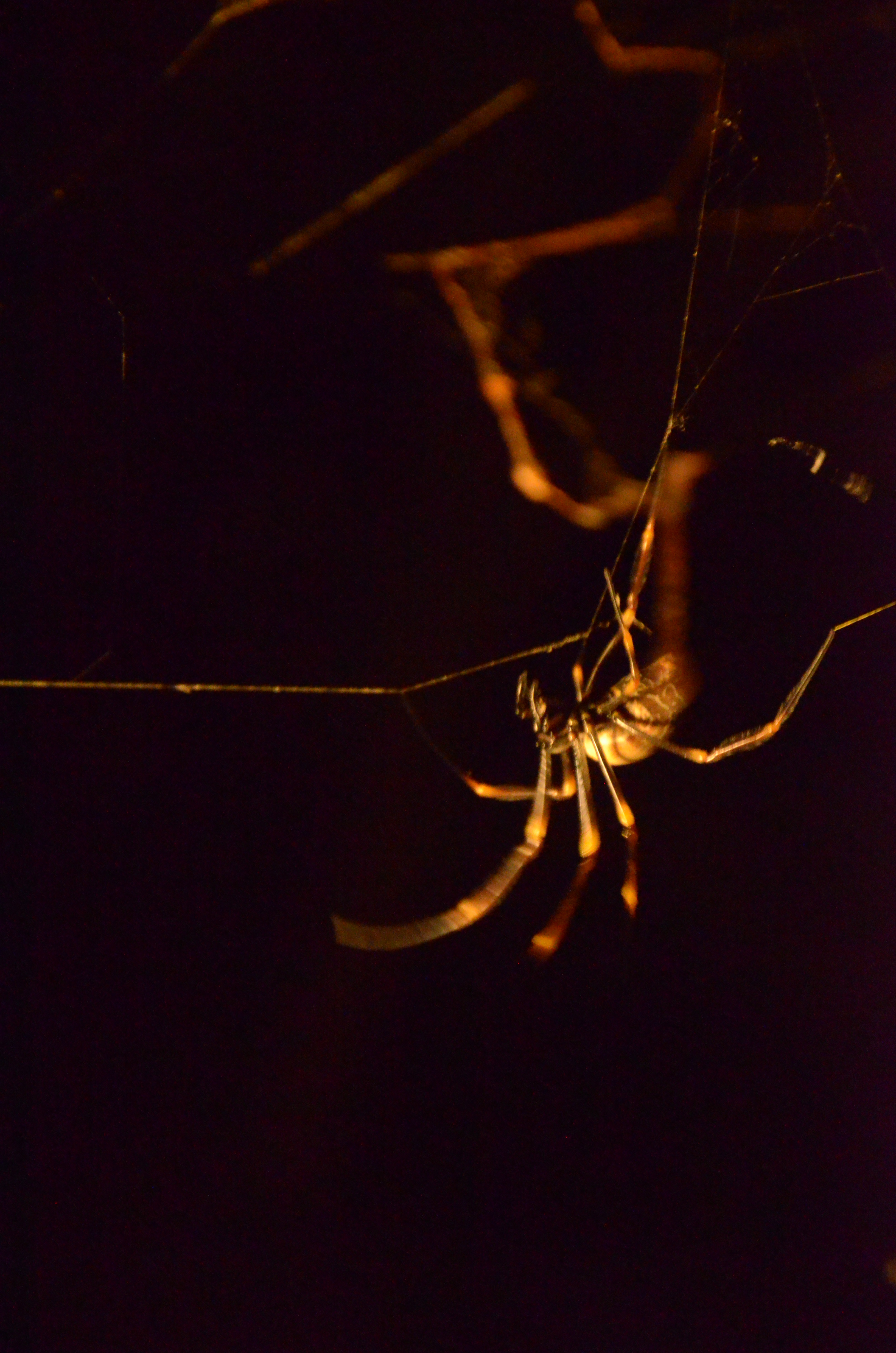
The work of spiders was everywhere evident, but the female giant orb weaver was unmissable. She was busy unpicking broken sections and fabricating a new span, crocheting it from a substance formed in her belly, fastening it all together. (Meanwhile, the tiny males hung around on the periphery, next to useless.)
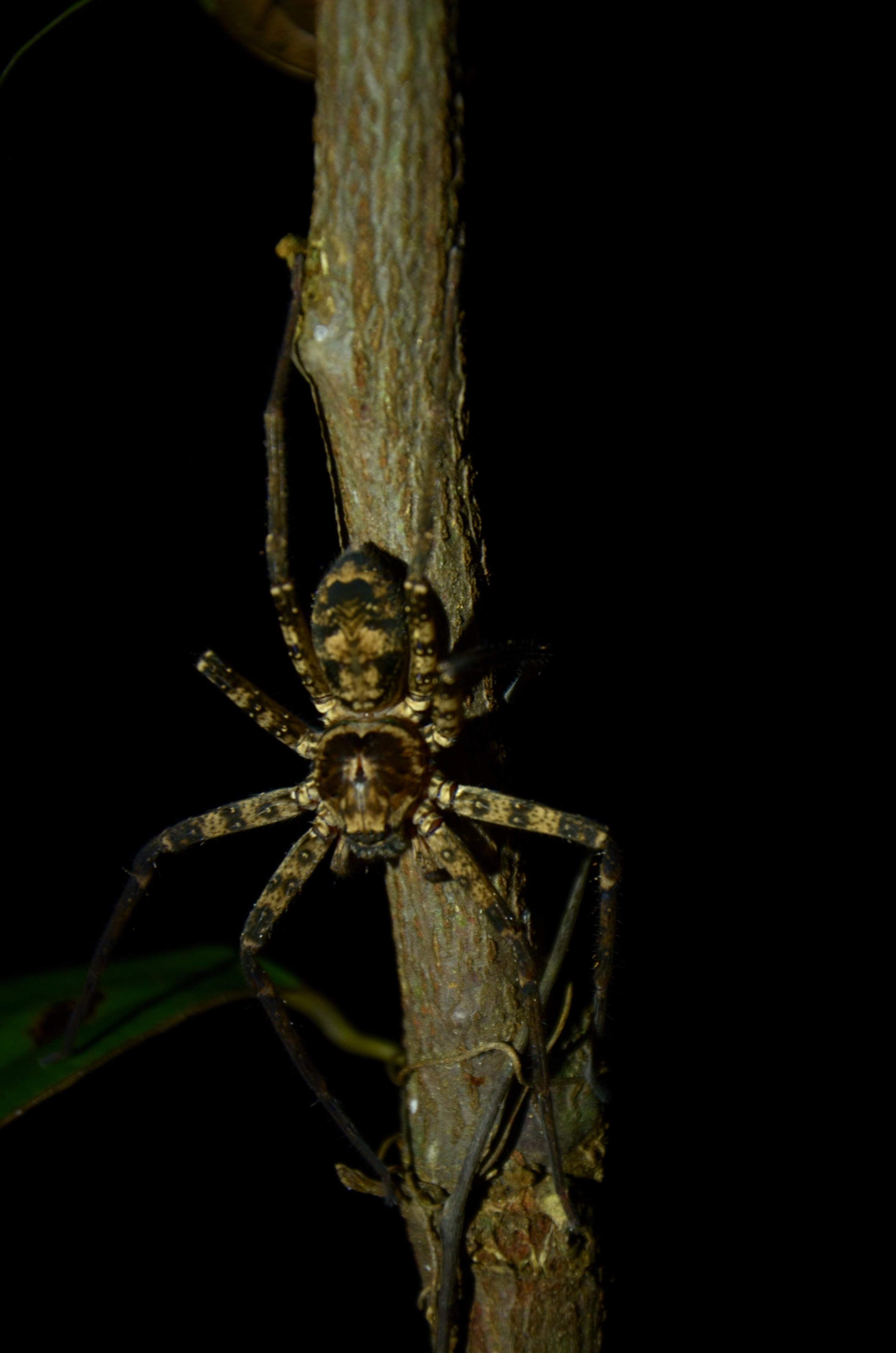
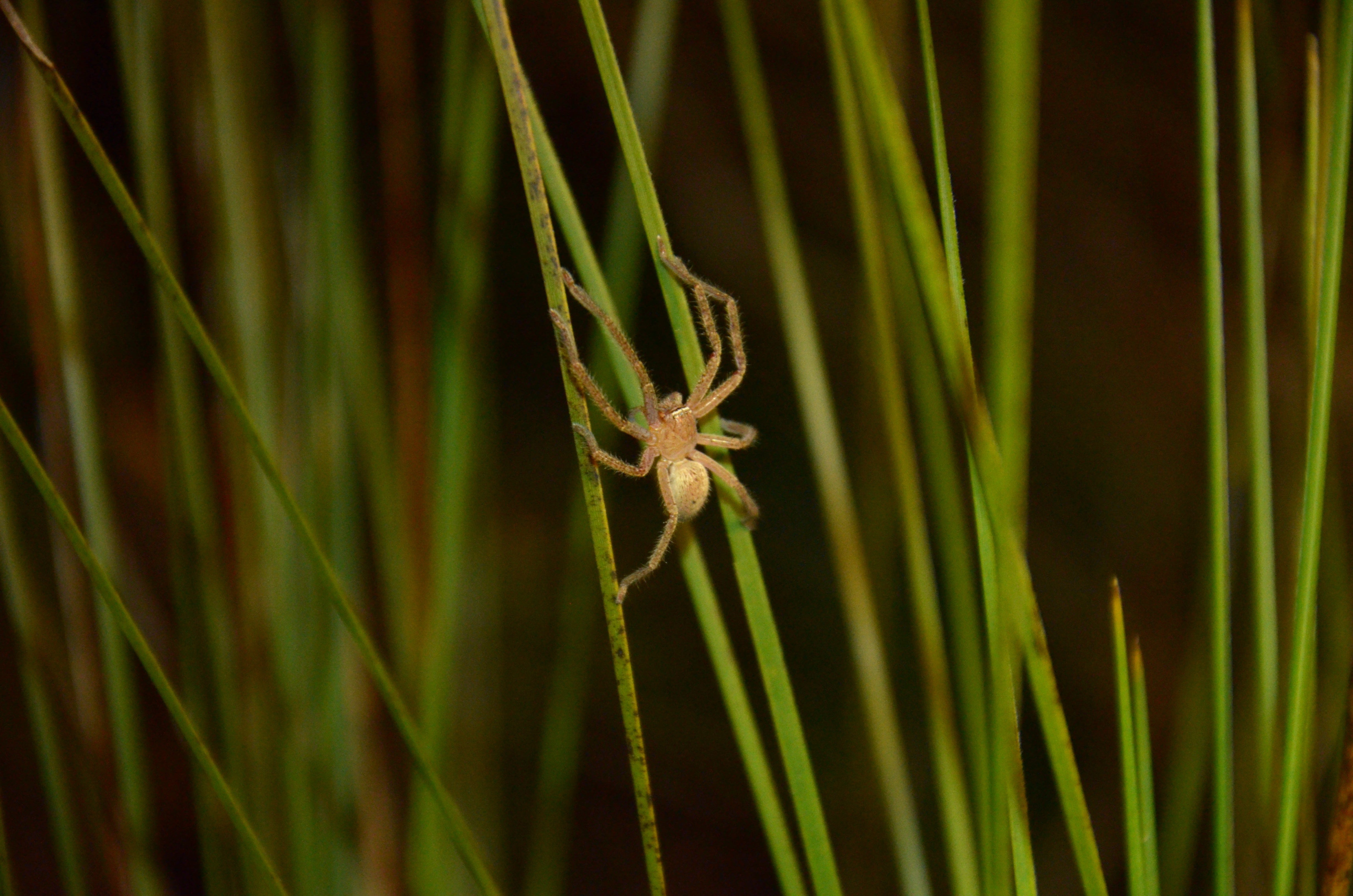
Casting my light around in Queensland’s forests, I caught a glimpse of innumerable flashing baubles, green and blue neon beads strewn across the soil and hanging from tree trunks. It was the eyeshine of spiders. It is easy to find arachnids in Australia, but I nevertheless hadn’t guessed just how many of them were stationed around me until I saw the array of sparkles.
Eyeshine is caused by a layer of iridescent tissue called the tapetum lucidum, which in spiders occurs in their secondary eyes. The tissue reflects light back through the spiders’ retinas, improving their vision in dim conditions. Which means they saw me long before I could see them: a frequent theme for humans wandering around at night.
We have devised tools to make the darkness less scary for us, but it still is not our natural element.
I had been partly inspired by a children’s book written by a Queenslander in the ’90s. Narelle Oliver’s The Hunt is a pictorial account of nocturnal crypsis – camouflage and disguise – based in the granite country of Girraween. I wish it had been on my childhood bookshelf. There is an alluring quality to Oliver’s illustrations of owls, geckos, stick insects and other animals in the dark woodlands.
The large-format pictures come with simple, single-sentence captions – “Now the frogmouth has disappeared / so the Powerful Owl flies on” – but also has a visual guide at the back, outlining the animals that have been hidden in the illustrations. It makes you want to go walking in the forest, knowing how much you’ve missed.
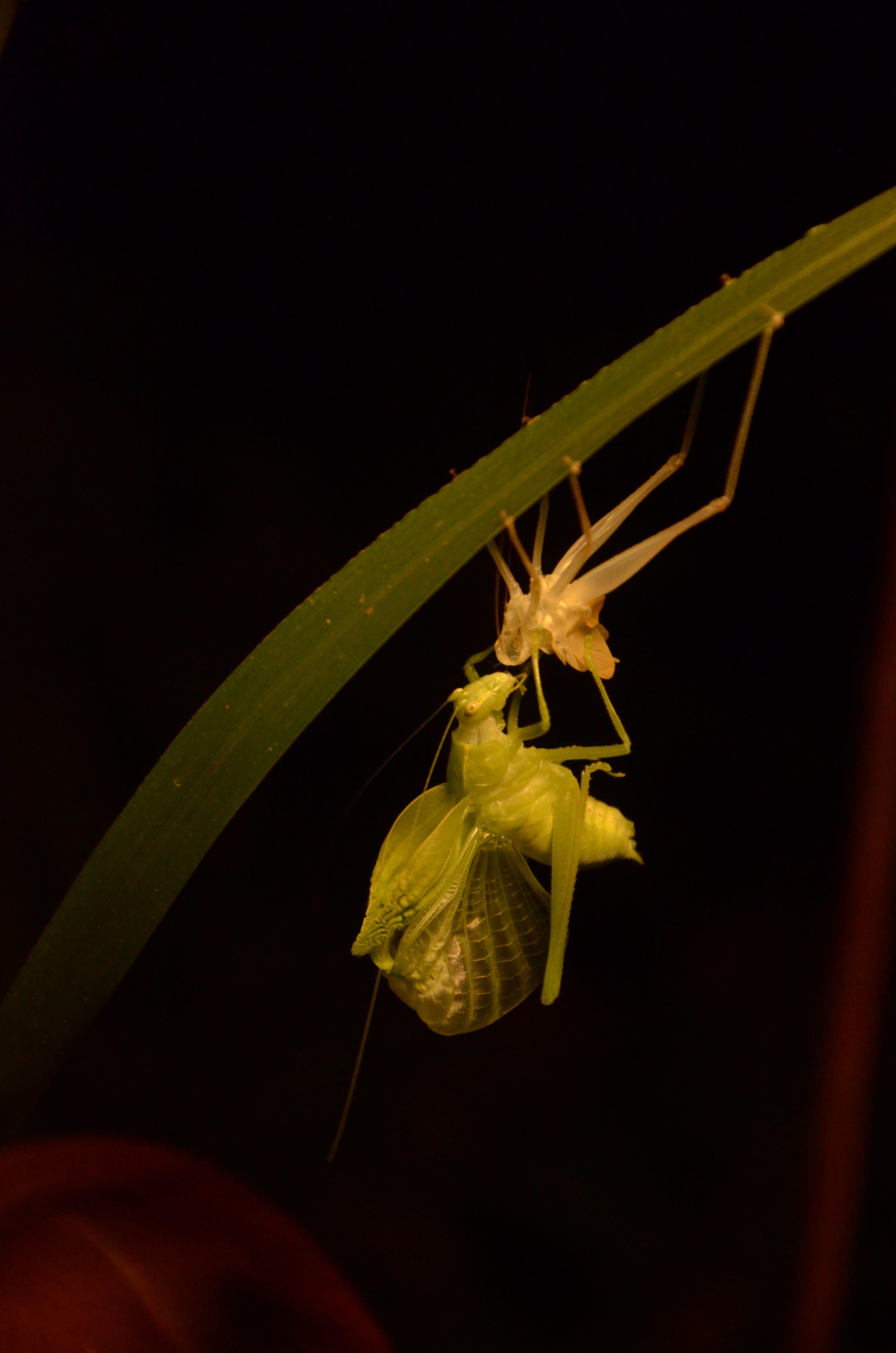
One night, my eye was caught by gymnastics on a blade of guinea grass. I crouched to watch a katydid as it emerged from the shell of its old body. It hung upside-down, trying to prise its legs free. In their partly-opened state, the wings were soft and fragile – the picture with which I want to compare it is that of a curl of butter, cut so finely from the pat that it’s translucent.
A minor breeze blew the lank grass around. It looked almost catastrophic for the act of metamorphosis. I was sure it would knock the poor, fresh-green insect to the ground. But the katydid held on. Indeed, it used this mechanism to finish off its laborious task. It rubbed against a broken fern stem and became unstuck from its husk. Then it clambered onto another blade of guinea grass. The katydid was still being shoved about by the wind, but the new chapter of its life had begun.
I picked up the larval case. It was ivory-coloured, but brittle, shrivelled. An insubstantial wisp; almost nothing.
There are bigger creatures, too – other mammals out for an evening stroll. One sultry evening, in Noosa, I was also amused to come upon an echidna, burrowing furiously in the sand beneath my walking track. The temperature also meant that ants were active, so the echidna had no reason to go to bed. I could tell it was enjoying its midnight snack.
So too were the cast of flying foxes – grey-headed fruit bats – that goaded me outdoors. They’d been snickering and squabbling outside my room for several days; a party of perhaps forty bats were feasting in the forked branches of several flowering paperbarks.
These good-humoured animals live boldly alongside humans in all sorts of urban settings. For a long time they were unfairly maligned; it was as if they trespassed on our territory, when in fact it was us who built our infrastructure around their long-held habitat. Thankfully, many of us now are more inclined to see the flying-foxes’ heroic labour – dispersing seeds far and wide, replenishing the forests as they seasonally migrate.
Narelle Oliver’s The Hunt highlights the dramas of the night. Every time you turn the page, you see another species swooping or fleeing or gobbling its prey.
Such epic observations are rare, however, for this nocturnal naturalist. Even with the headtorch switched to its brightest setting, the circles of light catch a small percentage of what I’m surrounded by. Birds and bats peel off from tree branches; species cannot be identified by the pale brown shapes that swiftly vanish. Occasionally there’s a rustling in the bushes, a reminder that the majority of what’s out there has not been seen.
Then again, as is often the case with ecological observations, encounters can’t be prearranged – all you can do is go out as often as you can. It helps to have half a clue, but even then, the critters go about their business however they please. You must be there.
Years ago, when I lived at a different rural address in Tasmania, I set myself up in an outdoor bathtub on a cold autumn night. I was bombarded with bulky moths, a species known in Tassie as ‘rain moths’. These emerge from their subterranean larval stage when precipitation softens the ground. In turn, this preponderance attracted an assembly of tawny frogmouths, who strutted around with their feathery mullets, like ageing rockstars, plucking the meaty moths with aplomb, feasting while I watched them from the tub.
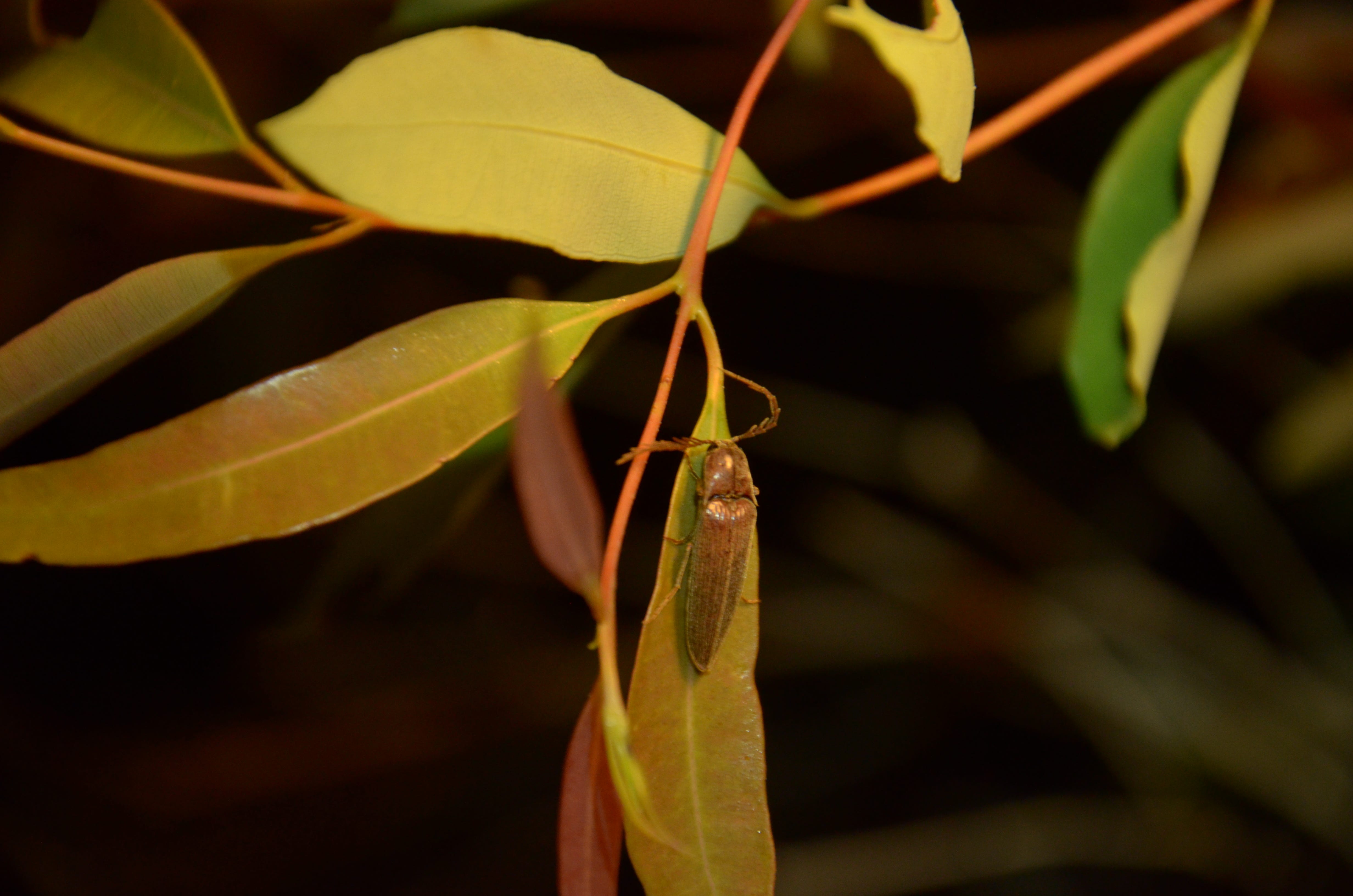
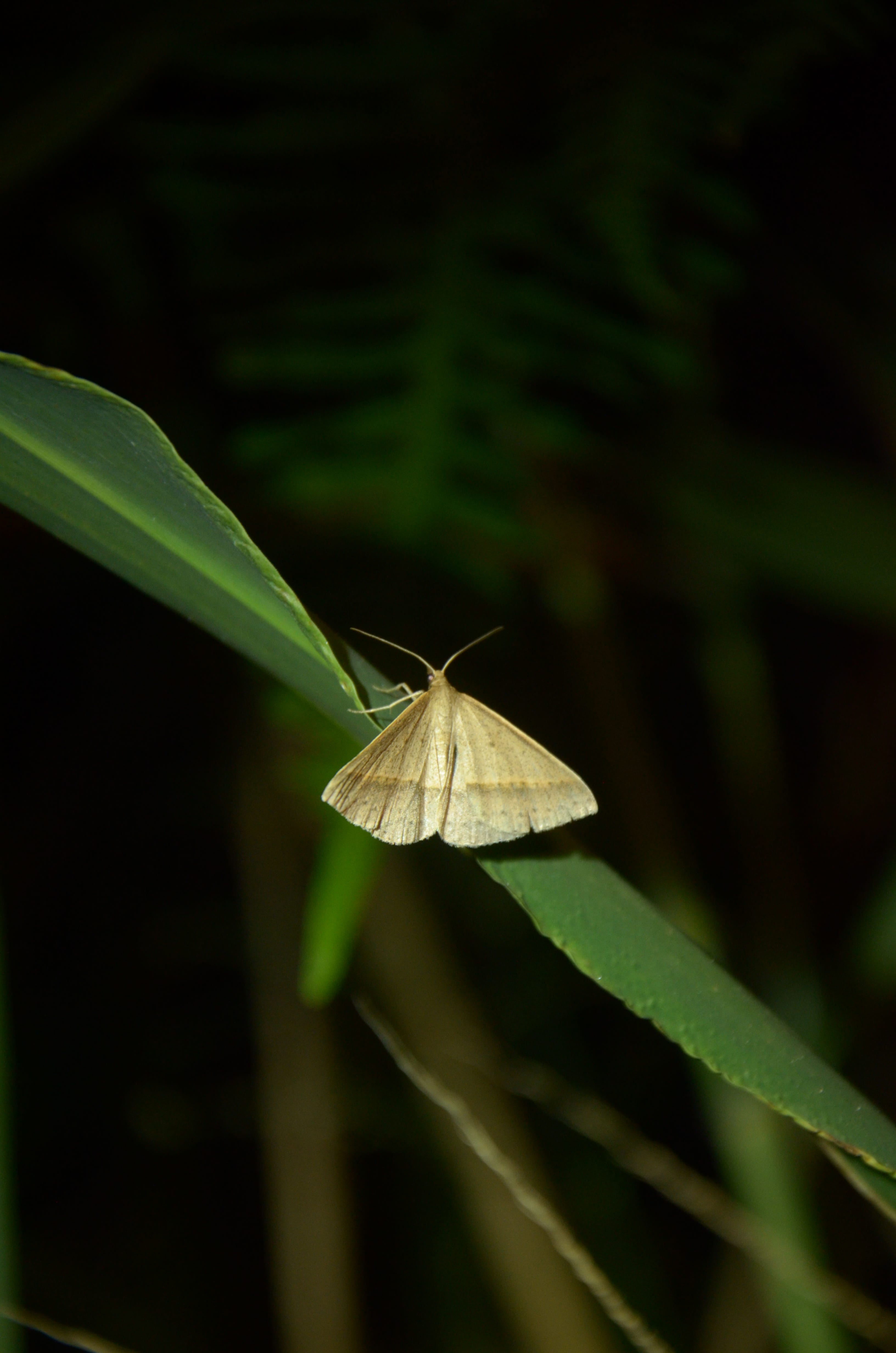
I walk around another campsite, this time in coastal heath. My torch makes monstrous figures of the giant grasshoppers; the antennae of a longicorn beetle wave in the breeze. There’s a nocturnal butterfly in a state of zen – I inch towards it with a camera, but it doesn’t even bat an eyelid.
On the timber of the scribbly gums, ants write their own graffiti in invisible ink. Others throng around the blossoms of banksias, which glisten with sweet nectar. The long strands of the xanthorrhoeas are used as a perch for crickets, moths, cockroaches and spiders.
These familiar species are full of life, but I wonder what’s absent. Of late, I’m reflecting on the term ‘shifting baseline syndrome’, the phrase coined to describe how each generation gets more used to ecological depletion.
I am drawn outdoors in order to keep track of how things change. Certain animals may be lost within my lifetime; it seems a worthwhile exercise to meet them while they’re around. If nothing else, I want, in years to come, to tell the story of those among whom we lived in these nights and days: the moths, the ants, the stick insects.
These reflections have a post-script, of sorts, in that I have since found myself overseas. I’m now even closer to the equator. Among the many differences in ecosystems, I stumble across a source of wonder: fireflies.
These bioluminous beetles seem to drift around like aerial decorations. Only the males glow, firing up the lower part of their abdomen – siphoning oxygen from an abdominal chamber to set off a chain reaction of chemicals that emit their famous flash. A layer of reflective cells acts like a mirror, making it more radiant. Each male firefly, like a lighthouse, has his own flashing pattern. It all occurs, of course, so that he can impress a potential mate.
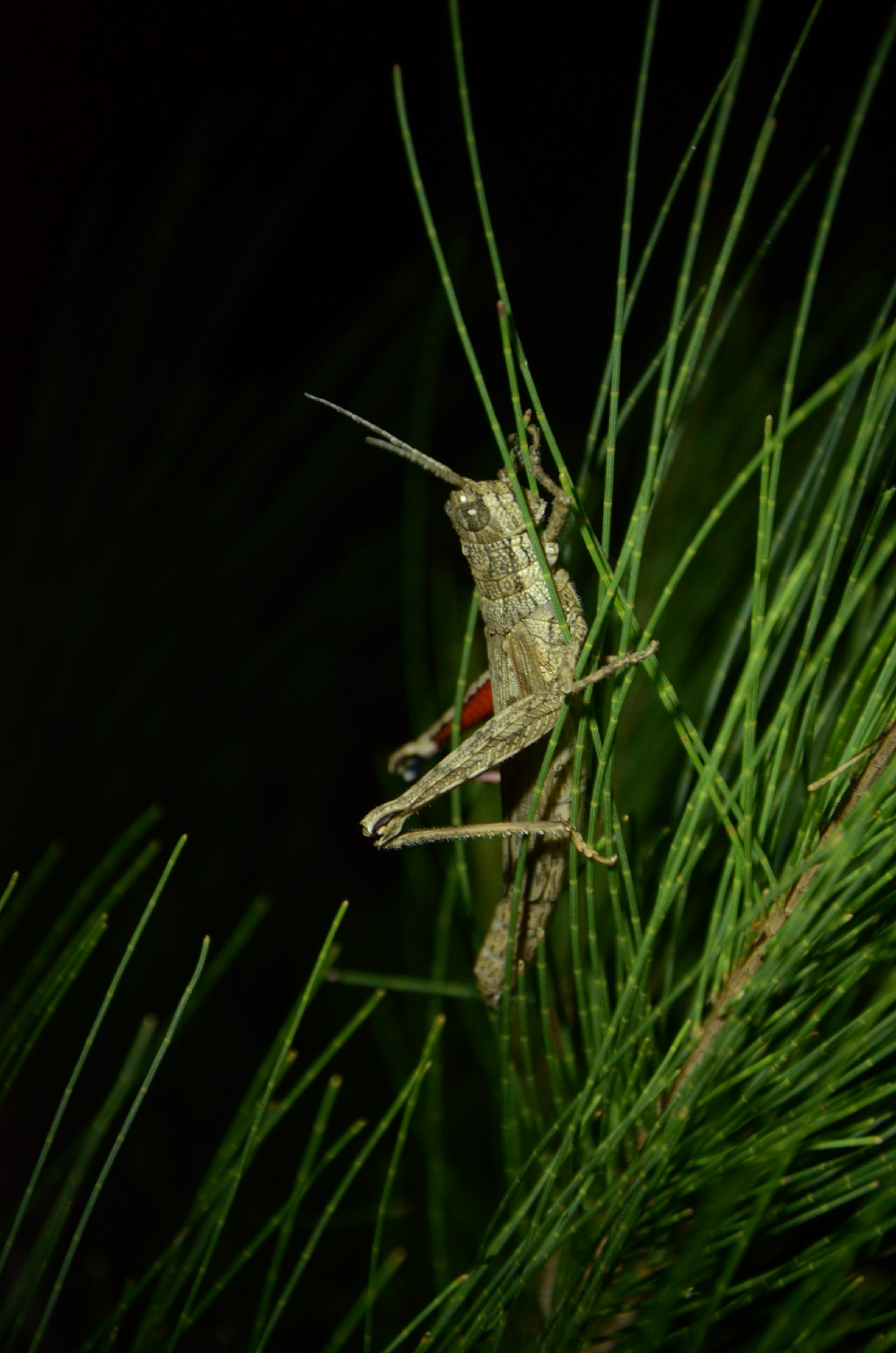
Last night, walking through the village – casting my headtorch on countless frogs and spiders, and the biggest snail I’ve ever seen – I followed a firefly with my headtorch. It took rest on a leaf; its pulsing light was temporarily paused. Without its glow, the beetle was fairly drab: not without charm, with its tidy wings and busy antennae, but not the fairytale image to which it would revert once it set out again to impress a female.
Light pollution disrupts the mating rituals of fireflies; it’s one of the major threats to their survival worldwide. Our artificial bulbs overpower their luminous glow. Looking out at the village, with its festive glow (it was Friday night and karaoke echoed up the valley), I thought again of how much our species has done to attempt to wrest control of the domain of night from the critters who adapted to it millions of years ago.
I switched the headtorch off and returned to my guesthouse in darkness.