
Why Get On Stage?

I was amazed and whispered:
‘I love these amphitheatres.’ - George Seferis, ‘On Stage’.
I was the first to use our green room, which was in fact a black tarp draped over a simple scaffold, with a few tattered pieces of furniture inside it. It was a cool morning on the gold paddocks of Quercus Park. But within a few hours the festival site was sweltering; the black-clad green room became a radiator.
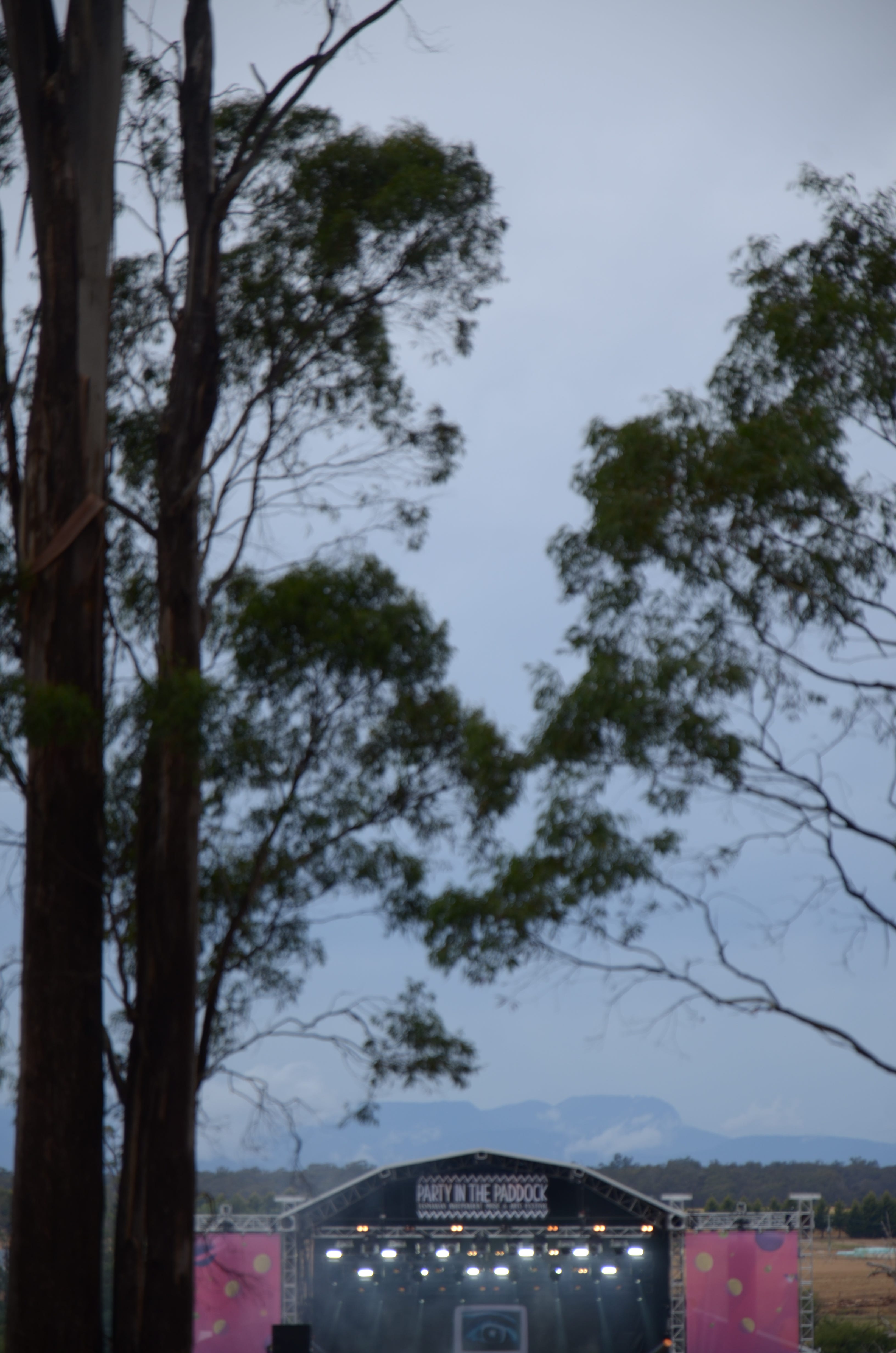
It was my fourth year working at Party in the Paddock, sharing dust with 14,000 other revellers. My job here is hosting live interviews; the festival gives me a few hours a day in a cosy side-stage called the Silvertongue.
My guests are interesting Tasmanians: politicians, artists, activists and community leaders. A keen audience comes by for each session – although occasionally seats are taken by hungover teens or punters seeking shade. None are turned away.
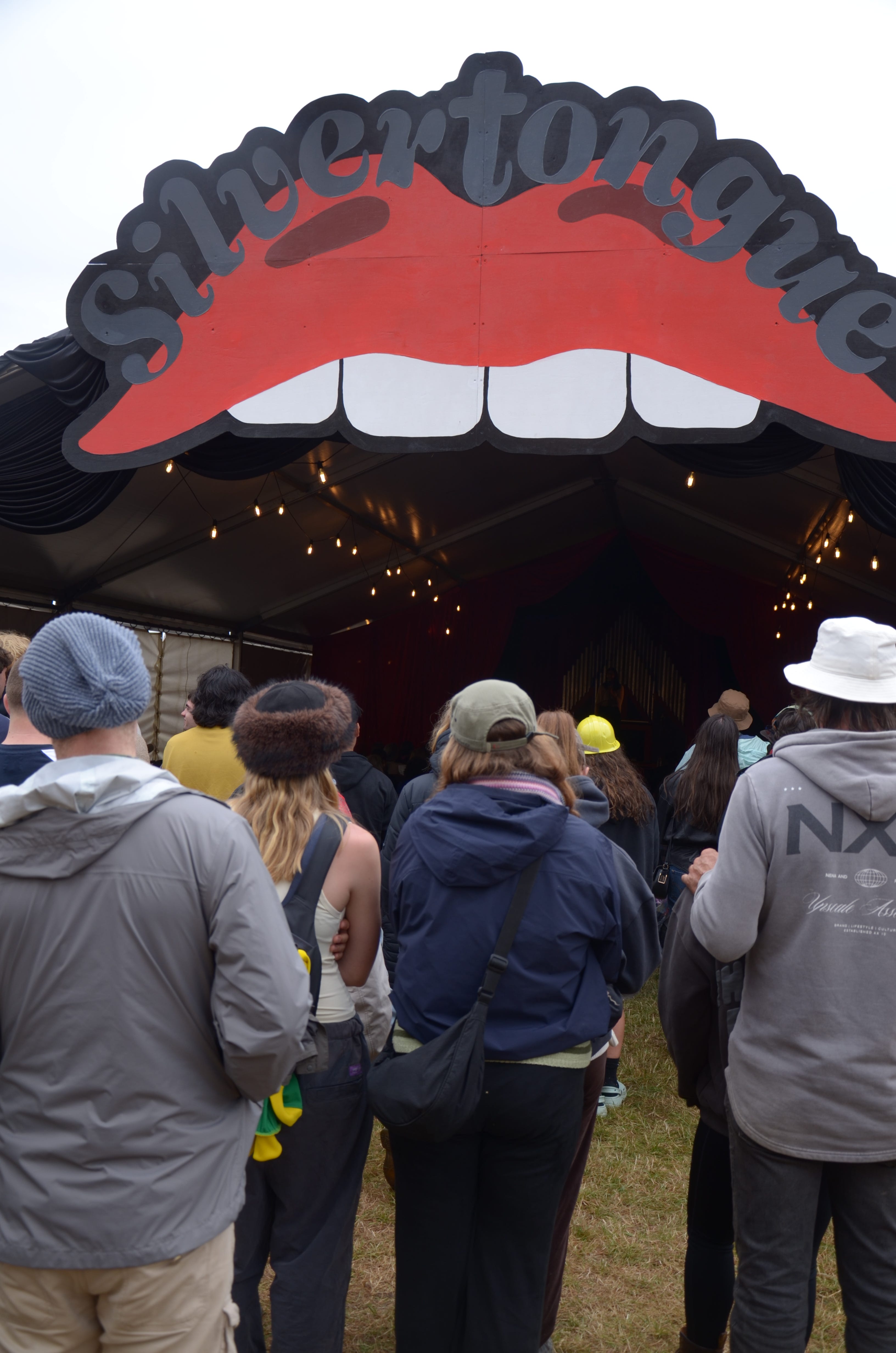
It’s satisfying work. I’ve had some memorable discussions over the years, and it seems (to me at least) that I’m getting more settled into the role – more comfortable in the host’s chair, better at eliciting an enthralling chat. After each stint in the paddock I think: I’d like to do more work like that.
It may sound unusual to those who know me from my rusticated life in the bush, but when I was a young dreamer, growing up in the suburbs of Launceston, I wanted to be the host of one of those talk shows that are carefully stage-managed in California studios. I had no idea how to go about it and put zero effort into finding the path into a career in entertainment, arts or anything creative.
Only recently has it dawned on me how many obstacles were in the way. There was little encouragement to be found around me. But though I didn’t make it big in California (I dare say that this was for the best), I did get my talk show: in a dusty field in northern Tasmania.
All told, I’ve been getting on stage for about 20 years now. At one point, I may well have been mistaken for an entertainer. Aside from spouting poetry and stories, I performed comedy and compered festivals. At one point I was doing events on a weekly basis. For a decade, I programmed and presented a variety show – in a pub, not a studio, but it still may have been coloured by my adolescent aspirations.
These gigs recede in memory; sometimes when I think of that line of work, I seem to be looking back on the life of a different man.
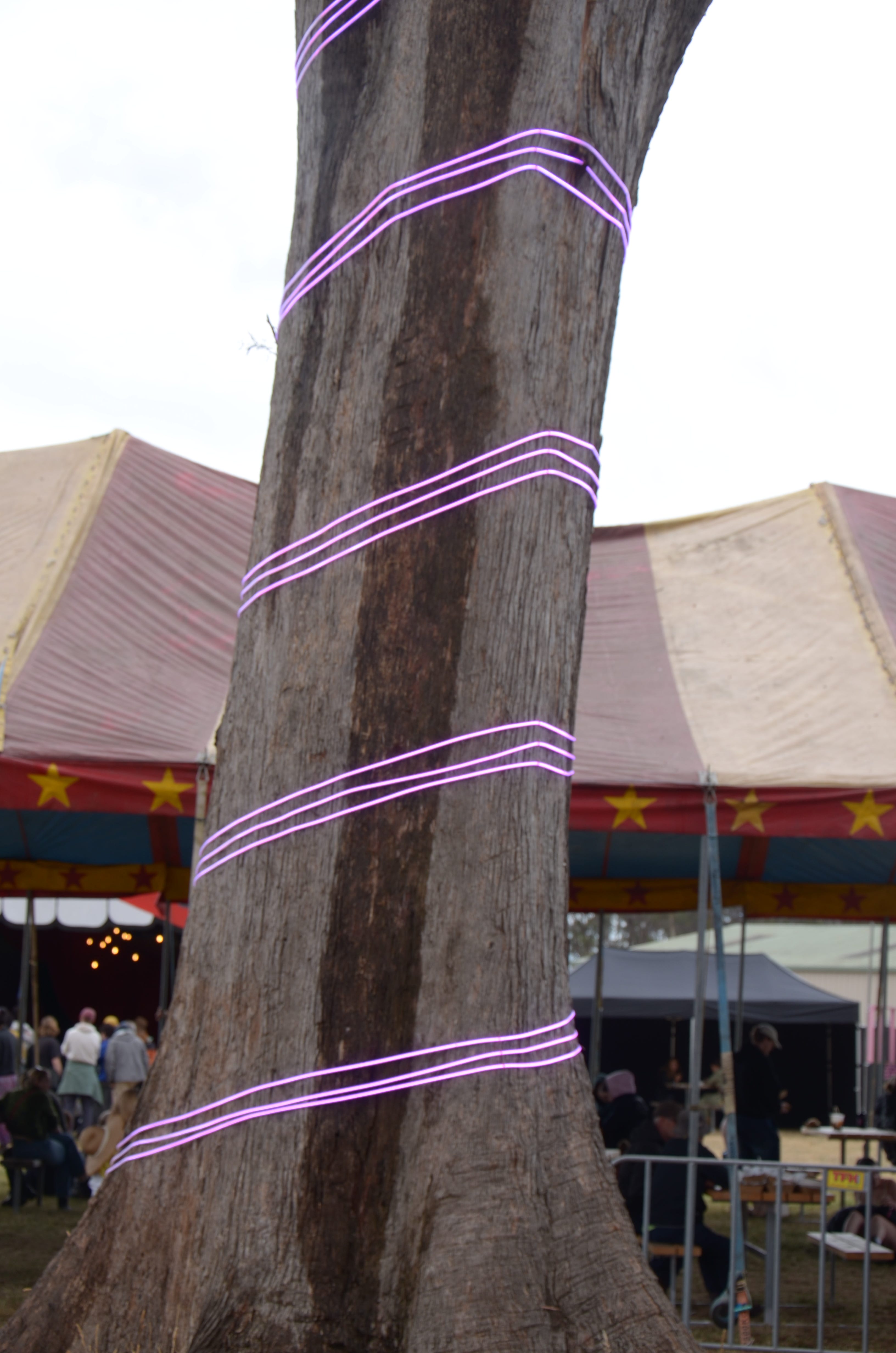
I’ve been a hermit of late. It turns out I can easily slough the costume of an extrovert. Even in that season I had as a showman (odd to say, it peaked in the pandemic), I had a home base, to which I fled for long periods of quiet time in the bush. The art of writing poetry has required a lot of inward focus.
Before Party in the Paddock, I hadn’t been on stage for about six months. It’s about as long an absence as I’ve had from stage time. My last show had been in Melbourne, in the back bar of a grungy pub where my poems were punctuated with clatter from the kitchen. It had been a bit of fun and no less messy than a poetry gig should be, even if it wasn’t exactly heartening for my career.
That night in a more stylish venue I told a mate, a fellow performer, that I was tempted to withdraw from the stage. She looked sadly up at me. “But when will you wear all your eccentric clothes?” she asked, or something to that effect.
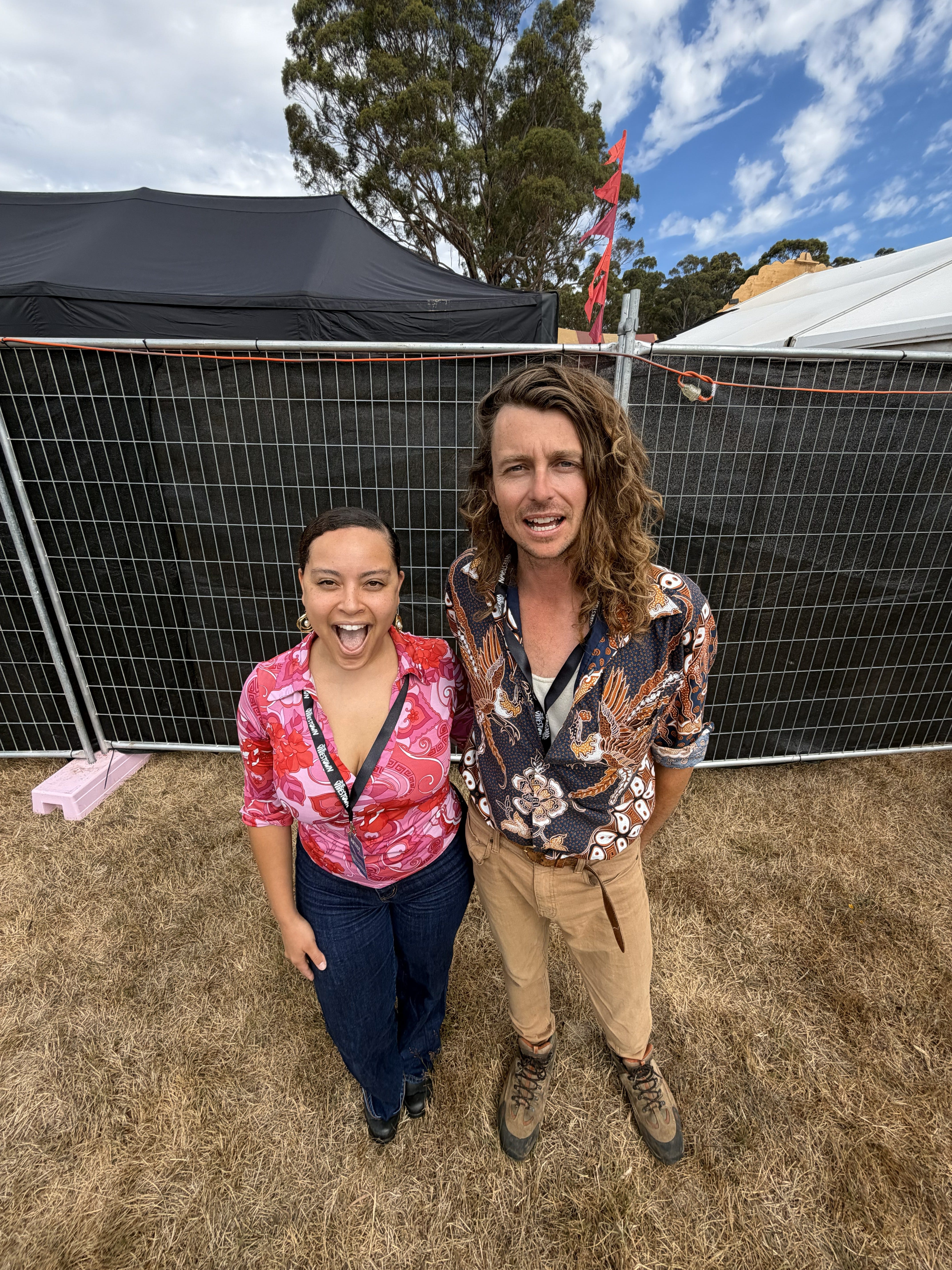
Another guest of this past weekend’s festival was Tim Shiel, a radio host and electronic musician. He hosted a session titled ‘Why make music?’ The pretext for Tim’s inquiry may have been the eerie feeling of playing the fiddle while the world burns, but it was also a reference to how bloody hard it is to make ends meet as an artist in Australia – a challenge that was often mentioned throughout festival sessions, even by acts that would be considered success by any other common definition.
I kept Tim’s question at the fore of my mind as I wandered around watching acts. Why do any of us get on stage at all? It’s a curious habit. Live performance offers no safety net and yet pays no bonuses for high risk work.
The word ‘exposure’ is often associated with artists. The connotation is meant to be positive: we are often encouraged take work for the sake of future opportunities (in lieu of cash). Yet the image that comes to my mind is that of a sensitive soul running a gauntlet of criticism and gossip, with nowhere to hide until they manage to duck behind the parapets, backstage.
One of my guests this weekend was the writer and performer Justin Heazlewood, who for more than two decades has created and staged work with a hyperventilator’s energy. His body of work is impressive – and hasn’t come easy. In fact, nothing about the story of Justin’s career suggests a smooth ride.
For one thing, he comes from Tassie’s north-west, where the average resident doesn’t like to stick their neck out. There, accusations of showing off can be made with a special menace. But Justin grew up with a theatrical streak. It was a trait that he refused to shake.
Without leaving the north-west coast, he might not have been able to make a life. Justin ventured to the mainland, where a more open-minded audience might be found. As Justin told us at Party in the Paddock: “I wanted to be seen!”
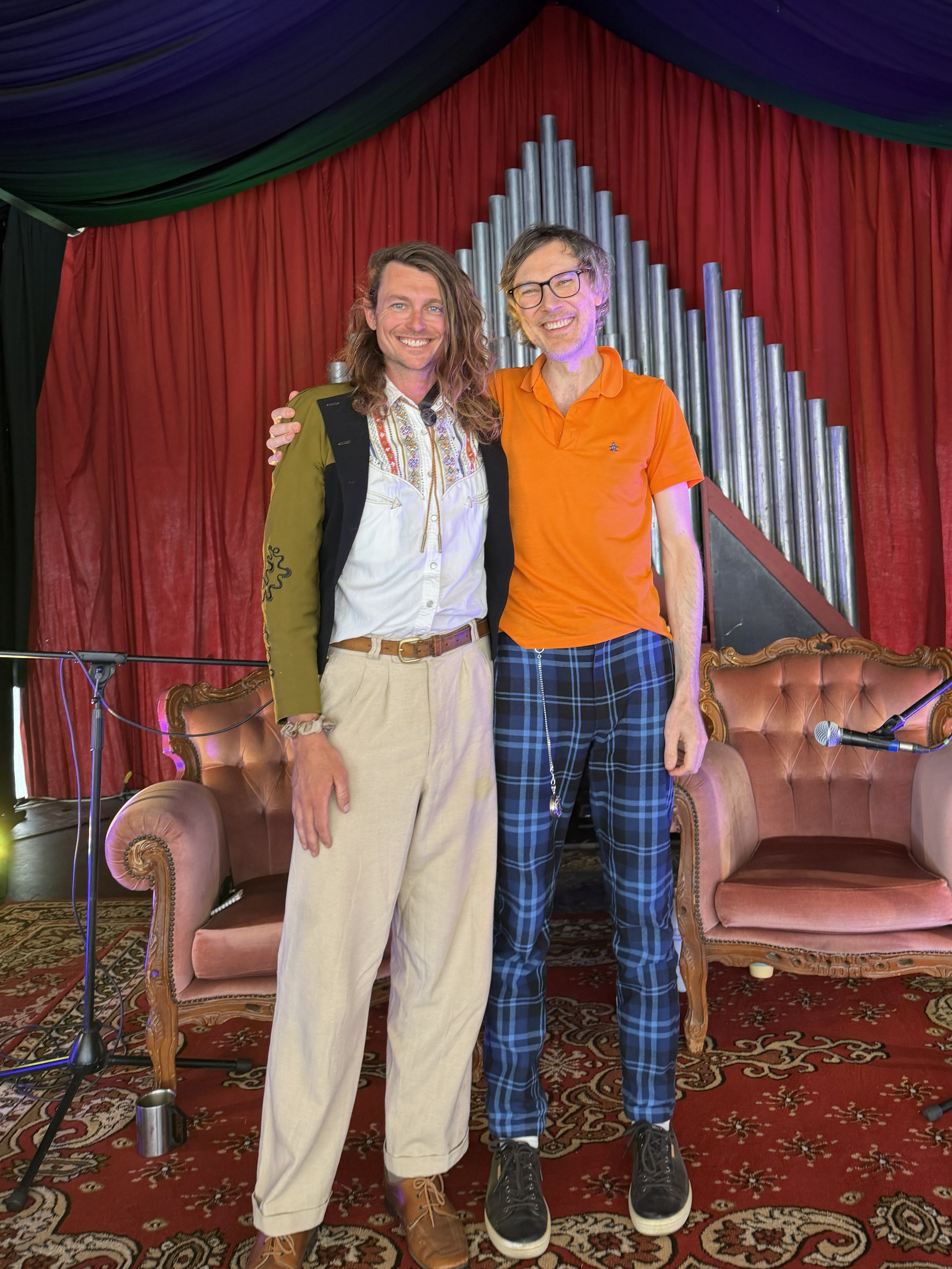
It isn’t as if Justin’s enthusiasm hasn’t been tempered by difficult experiences. After chatting with him, I found myself wanting to hear the little voice that still peeps like a baby bird from weird perches in my brain. What motivates us to take our innermost thoughts and put them on a stage – or a page – thereby letting them be seen and heard by strangers?
Is it an offering or a gift? Have we taken up a mantle, playing an important social role like the bard or shaman of other cultures? Or is it all just a misplaced desire for acceptance, an attempt to make up for what we missed in childhood, a desperate urge to be loved? Is the point actually to wear all the weird clothes I’ve found at op shop over the years?
Why get on stage? I found a confusion of answers as I walked around Quercus Park for three days. A good response is that it’s fun to be in the thick of a theatre of the absurd: for instance, on Saturday afternoon, I watched the Premier of Tasmania watching hip-hop artist Genesis Owusu. An incongruous pairing.
Other affirmations came from the crowds who joined me in the tent with my interesting Tasmanians. I interviewed 74-year-old politician Peter George, who – as well as being passionate – was remarkably candid and affable. In the front row were two young lads; I assumed they were looking for somewhere to snooze. I was later told, however, that mid-conversation, one of them turned to his mate and said, “This is fucking awesome!”
Out in the paddock, before either of us got on stage, I spoke with Tim Shiel. I might have been lamenting the looming climate apocalypse, the blight of shitty and omnipresent artificial art, or how many of my friends are struggling to pay their rent. Tim nodded in agreement but then gestured broadly at dustbowl, where thousands of punters danced, flirted and laughed.
“We need it now more than ever,” he said. Honesty, candour, warmth, melody, mirth: they are the raw materials for a good life, worth more than money, and – thanks to the artists who pour their hearts out first and set the standard – they’re easily found at a music festival. It’s more interesting, too, than a California studio.
I will be back on stage soon, I think; the festival weekend fostered some optimism, and a sense that in performance I express some part of me that might easily have been held back. For the meantime, though, I am back in the shade of some tall trees, delving within to find something worth sharing in public, down the track.
Love your writing, and a good read. Would also love to hear/read the Hannah Moloney conversation ...
An inspiring read, thanks Bert. Keep us posted on your next gig in the south of the island.